Kitchen Sink Food Waste Odor & Fruit Fly Prevention Guide | Baking Soda & Vinegar Care
Daily kitchen hygiene guide to neutralize sour food waste odors, sanitize slimy sink strainer baskets, and block fruit fly breeding using baking soda and hot vinegar.
🛠️ Required Tools & Cleaning Agents
🔄 Alternative Detergents & Eco Tips
- Baking Soda & Vinegar → Alt: Sodium Percarbonate + Hot Water (Creates heavy active oxygen foam to strip organic sludge deep inside drain pipes)
- Drain Mesh Net → Alt: Biodegradable cornstarch drain strainer sock (Catches tiny food particles and disposes directly into food waste bags)
✨ Step-by-Step Care Instructions
Step 1: Empty Food Waste & Remove Strainer Basket
- Wear rubber gloves and empty all food waste scraps into the food waste disposal bag.
- Remove the stainless steel strainer basket and plastic water trap cylinder.
- Rinse away loose food crumbs with cold running water.
Step 2: Sprinkle Baking Soda & Scrub Basket Crevices
- Sprinkle 2 tablespoons of baking soda generously over the strainer basket and drain housing.
- Scrub the perforated mesh holes and underside rim using an old toothbrush.
- Alkaline baking soda neutralizes acidic rotten food odors and lifts greasy biofilm.
Step 3: Pour Hot Vinegar to Trigger Deodorizing Foam
- Warm 100ml of white vinegar in the microwave for 30 seconds.
- Pour the warm vinegar directly over the baking-soda-coated basket and drain trap.
- The effervescent foaming reaction breaks down foul odor compounds and kills fly larvae.
Step 4: Soak for 10 Minutes & Flush with Hot Water
- Let the bubbling solution soak for 10 minutes to sanitize all pipe crevices.
- Flush thoroughly with hot tap water for 1 minute to wash away all loosened sludge.
- Reinstall the clean water trap cylinder and strainer basket.
Step 5: Fit Clean Mesh Net & Keep Drain Covered
- Fit a new fine mesh net over the clean strainer basket to catch fine food debris.
- Keep the sink drain lid covered when not in use to block flies from entering.
- Enjoy a fresh, odor-free kitchen sink environment.
🩺 Self-Diagnosis Guide
✅ Can be restored with care
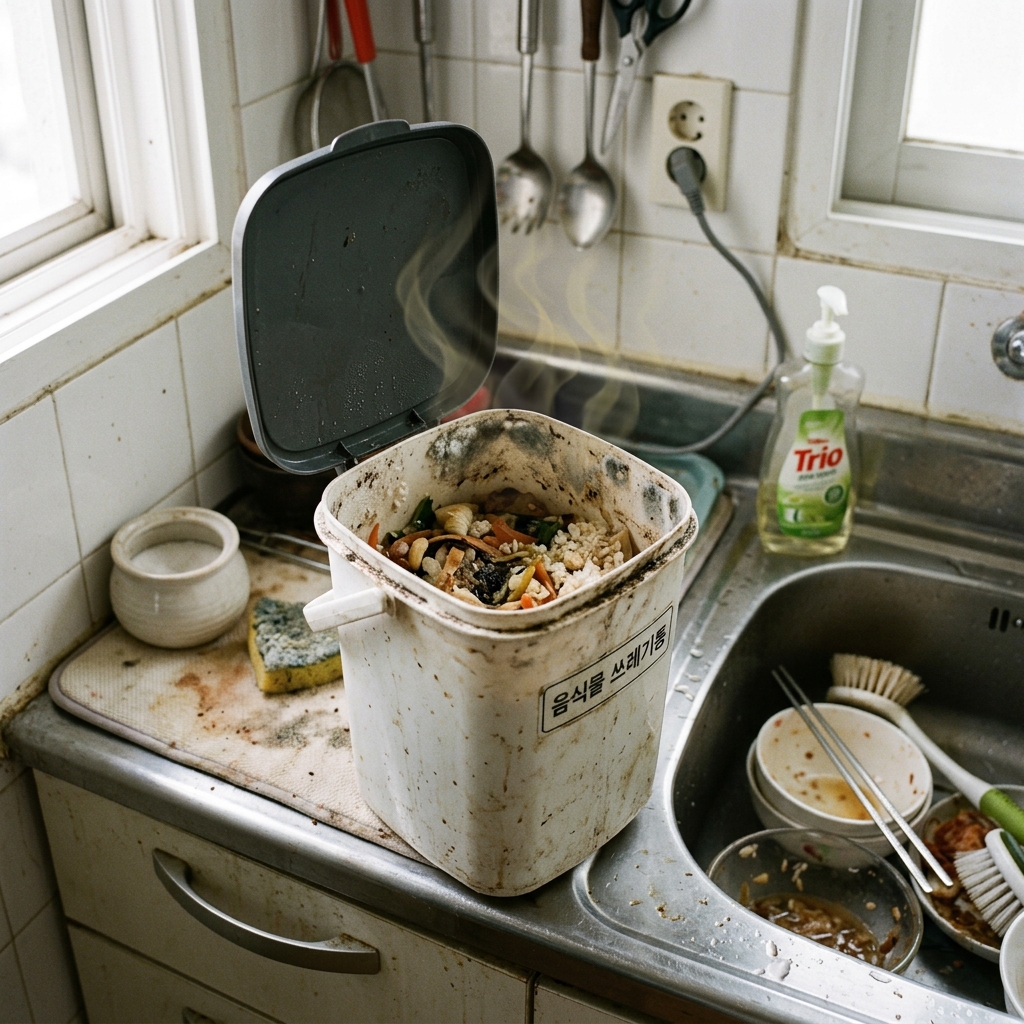
- Sour, rotten smell rising from the food waste strainer basket in the sink
- Slimy brown biofilm coating the bottom and walls of the stainless strainer
- Tiny fruit flies or drain flies hovering around the sink drain opening
❌ Reached end of lifespan (Proper disposal required)
- Cracked or deformed plastic drain trap assembly leaking liquid under the sink cabinet
- P-trap rubber washer completely degraded causing persistent sewer gas leaks
- Sink drain pipe clogged with hardened concrete-like grease fatberg requiring replacement
⚠️ Important Safety Precautions
- Do NOT pour boiling water directly onto thin plastic PVC accordion hoses (causes warping and leaks).
- Do NOT leave food waste sitting in the strainer basket overnight during hot summer months.
- Avoid harsh industrial caustic chemicals that emit corrosive fumes in enclosed kitchen spaces.
💡 Food Waste Disposer Replacement Guide: 3 Key Technical Specs Before Buying
♻️ Reached end of lifespan?
Check local disposal regulations instead of forcing reuse.
❓ Frequently Asked Questions (FAQ)
Q. How do fruit flies appear in the kitchen so quickly?
A. Fruit fly eggs often arrive on banana peels and produce surfaces. In warm kitchen temperatures (25-30°C), eggs hatch into adults in just 7 days, feeding on the fermenting biofilm inside your sink strainer.
Q. Can I freeze food waste in the refrigerator freezer to stop odors?
A. While freezing stops odors, food waste bags can harbor cold-resistant bacteria (like Psychrophiles and Listeria) that contaminate surrounding food. Storing in an airtight sealed container or daily disposal is much safer.
Q. What is the fastest way to get rid of drain flies?
A. Pour 1 kettle of hot water (approx. 70°C) with sodium percarbonate or dish soap down the drain. This melts the organic gelatinous biofilm where drain fly larvae nest.