How to Restore a Rusted Cast Iron Skillet | Complete Rust Removal & Oven Seasoning Guide
Step-by-step restoration manual for completely stripping rust from cast iron skillets using a mild vinegar soak and chainmail scrub, followed by 3-stage high-heat oven seasoning with flaxseed or canola oil to restore a mirror-like black non-stick patina.
🛠️ Required Tools & Cleaning Agents
🔄 Alternative Detergents & Eco Tips
- Chainmail Scrubber → Alt: Half-Cut Raw Potato Dipped in Coarse Salt (Oxalic acid in raw potatoes works synergistically with abrasive salt crystals to dissolve stubborn iron rust without harsh gouges.)
- Flaxseed Oil → Alt: Canola Oil, Grapeseed Oil, or Crisco Shortening (Never use extra virgin olive oil or butter (low smoke points leave sticky residue); use high-temperature drying oils for rock-hard polymerization.)
- Standard Kitchen Oven → Alt: Stovetop Burner on Medium-Low Heat for 20 Mins (If you do not own an oven, stovetop seasoning works by gently heating the oiled pan until it faintly wisps smoke.)
✨ Step-by-Step Care Instructions
Step 1: Vinegar Soak & Chemical Iron Oxide Breakdown
- Mix equal parts warm water and distilled white vinegar in a basin or sink large enough to submerge the skillet.
- Soak the rusted skillet for 30 minutes (do NOT exceed 1 hour, as acid will pit raw iron).
- Acetic acid reacts with red iron oxide molecules to loosen stubborn rust crusts naturally.
- Remove skillet and perform a quick initial rinse with clean water.
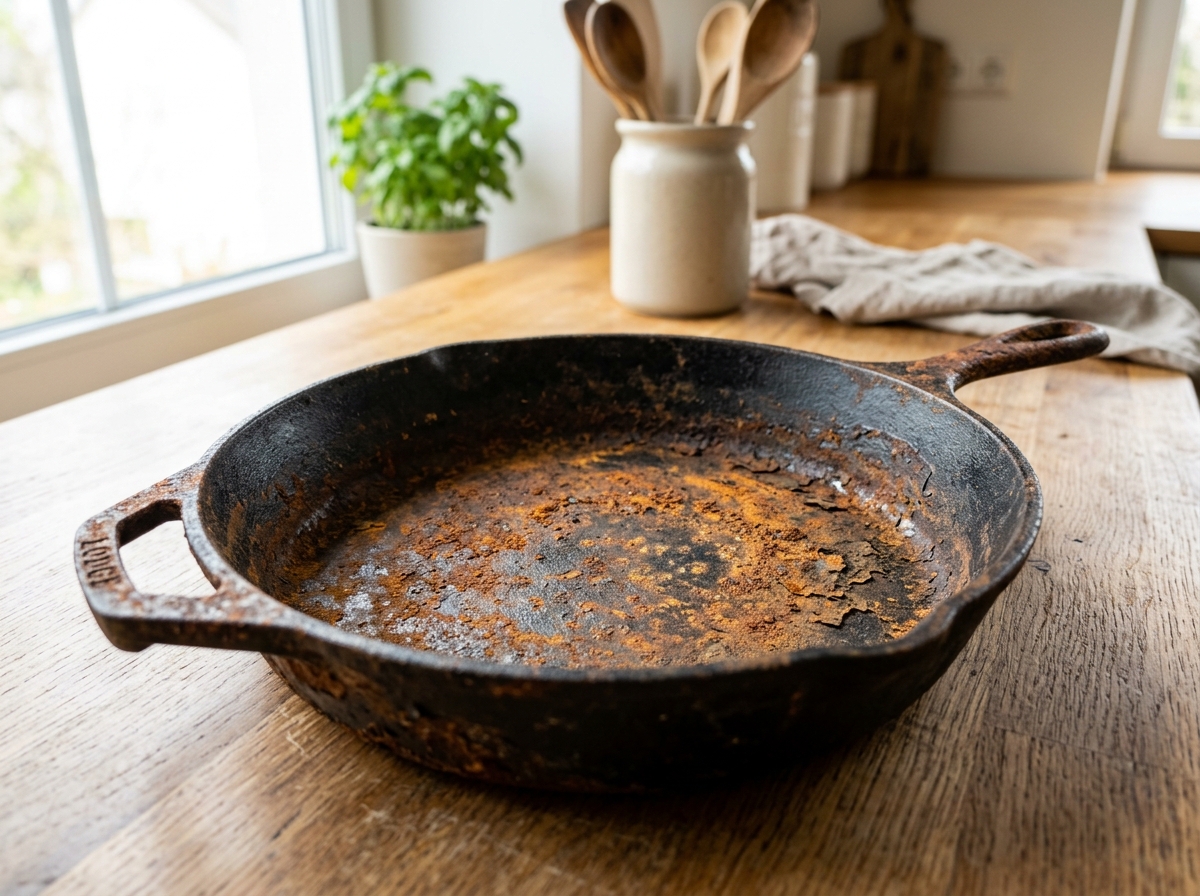
Step 2: [Before Inspection] Assess Rust Coverage & Stripped Seasoning
- Inspect the cooking surface, outer sidewalls, and handle for severe oxidation.
- Identify high-friction contact areas that require concentrated abrasive scrubbing.
- Ensure the casting is structurally intact with zero fractures or structural hairline cracks.
Step 3: [Process Deep Scrub] Strip Rust 100% with Chainmail & Coarse Salt
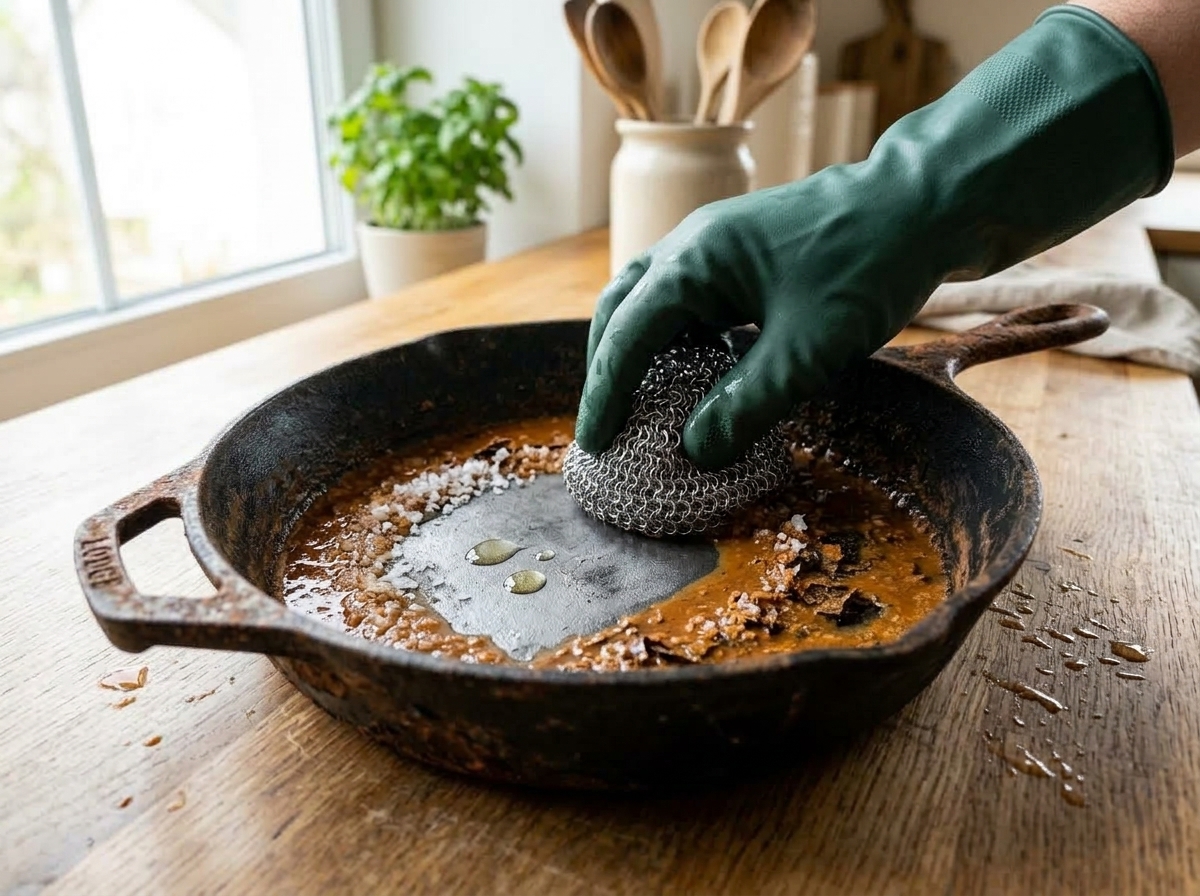
- Pour 3–4 tablespoons of coarse sea salt or Kosher salt into the damp skillet with a few drops of oil.
- Grip a stainless steel chainmail scrubber (or fine steel wool) and scrub firmly in small circular motions.
- Abrasive salt crystals lift rust scale without gouging the iron casting.
- Rinse with cold water to reveal a clean, raw, gunmetal-gray cast iron surface.
Step 4: 100% Heat Drying & Ultra-Thin Oil Micro-Layering
- Towel dry immediately, then place on a stovetop burner over low heat (or 200°F oven) for 5 minutes to flash off all microscopic moisture.
- While warm, add 1 teaspoon of flaxseed or canola oil and rub thoroughly over all surfaces (inside, bottom, handle).
- CRITICAL GOLDEN RULE: Use a clean dry towel to buff the pan until it looks completely dry as if you tried to wipe all the oil off.
- Only a microscopic molecular oil film must remain to prevent sticky gummy buildup.
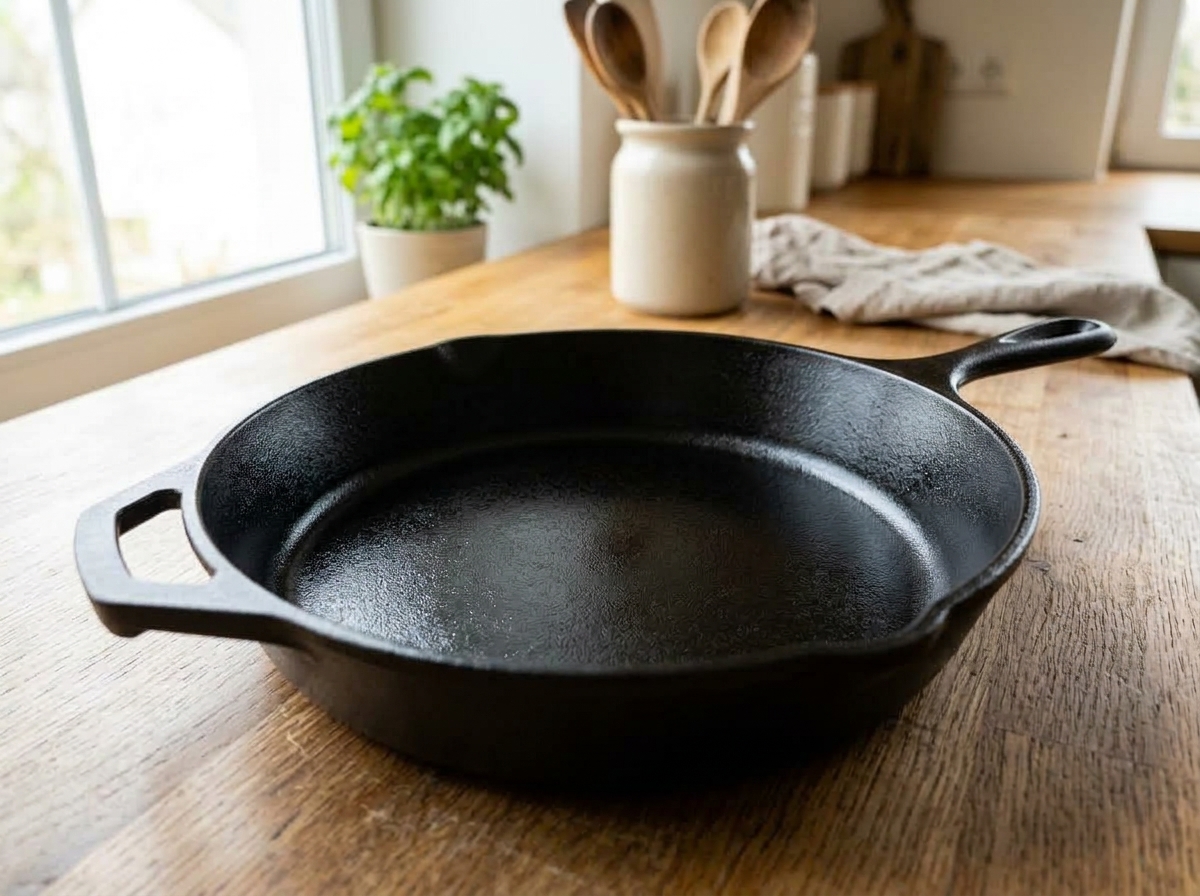
Step 5: [After Inspection] 450°F Oven Bake for 1 Hour (Repeat 3x) for Glassy Black Patina
- Preheat oven to 400°F–450°F (200°C–230°C) and place a sheet of aluminum foil on the bottom rack to catch any stray drops.
- Place the oiled skillet UPSIDE DOWN on the middle oven rack and bake for 1 full hour.
- Turn off oven and let the skillet cool down gradually inside without opening the door.
- Repeat this oil buffing + 1-hour baking cycle 2 to 3 times to build a durable, rock-hard polymerized non-stick black patina.
🩺 Self-Diagnosis Guide
✅ Can be restored with care
- Surface is covered in orange/brown powdery rust but the structural iron body remains solid and heavy
- Flaking black seasoning patches revealing bare gray iron underneath where food sticks stubbornly
- Sticky gummy oil residue from past improper seasoning emitting rancid oil odors
❌ Reached end of lifespan (Proper disposal required)
- Visible hairline cracks or complete metal fractures running through the skillet base or sidewalls
- Broken handle or large chunks chipped off from dropping onto hard tile floors
- Deep pitting rust that has eaten entirely through the iron casting creating pinholes
⚠️ Important Safety Precautions
- NEVER soak cast iron in vinegar for more than 1 hour (excess acid permanently pits and weakens bare iron).
- Never plunge a piping hot skillet into cold sink water—thermal shock will crack the heavy casting in half instantly.
- Do NOT use extra virgin olive oil, butter, or animal tallow for base oven seasoning (low smoke points produce sticky, rancid flakes).
💡 Cast Iron Skillet Replacement Guide: 3 Key Technical Specs Before Buying
♻️ Reached end of lifespan?
Check local disposal regulations instead of forcing reuse.
❓ Frequently Asked Questions (FAQ)
Q. What is the absolute best oil for seasoning cast iron skillets?
A. The best oil depends on drying properties and smoke point. 100% pure organic flaxseed oil creates the hardest, glassiest polymerized patina because it is a natural drying oil with high omega-3 fatty acids. For everyday high-heat affordability, canola oil, grapeseed oil, and Crisco vegetable shortening work exceptionally well. Avoid unrefined olive oil or butter which burn at low temps and leave gummy residues.
Q. Is it really true that dish soap ruins cast iron seasoning?
A. This is a widespread myth stemming from old-fashioned soaps containing harsh lye (sodium hydroxide). Modern mild dish soaps will NOT dissolve properly polymerized oil seasoning bonds. You can safely use a drop of mild dish soap and a sponge on stubborn grease. However, NEVER put cast iron in an automatic dishwasher, as dishwasher detergents are strongly alkaline and will strip your pan completely.
Q. Why is my cast iron skillet sticky, spotted, or gummy after oven seasoning?
A. This happens when too much oil is left on the surface before baking. The cardinal rule of cast iron seasoning is to buff the oil with clean towels until the pan looks bone-dry before it enters the oven. If it feels gummy, scrub the sticky spots with coarse Kosher salt and a chainmail scrubber, then bake again with a microscopic wipe of oil.
Q. How do I properly dispose of a cracked or fractured cast iron skillet?
A. Cast iron is 100% pure ferrous metal with high recycling value. If your skillet has suffered a catastrophic fracture or crack from thermal shock, wipe away excess food oil and dispose of it in your municipal scrap metal / metal recycling bin.