Swimwear Chlorine Removal & Elasticity Preservation Guide | Cold Water & Vinegar Care
Post-swim maintenance guide for neutralizing pool chlorine odor, preventing spandex elasticity rot, and keeping swimwear colors vibrant without fabric degradation.
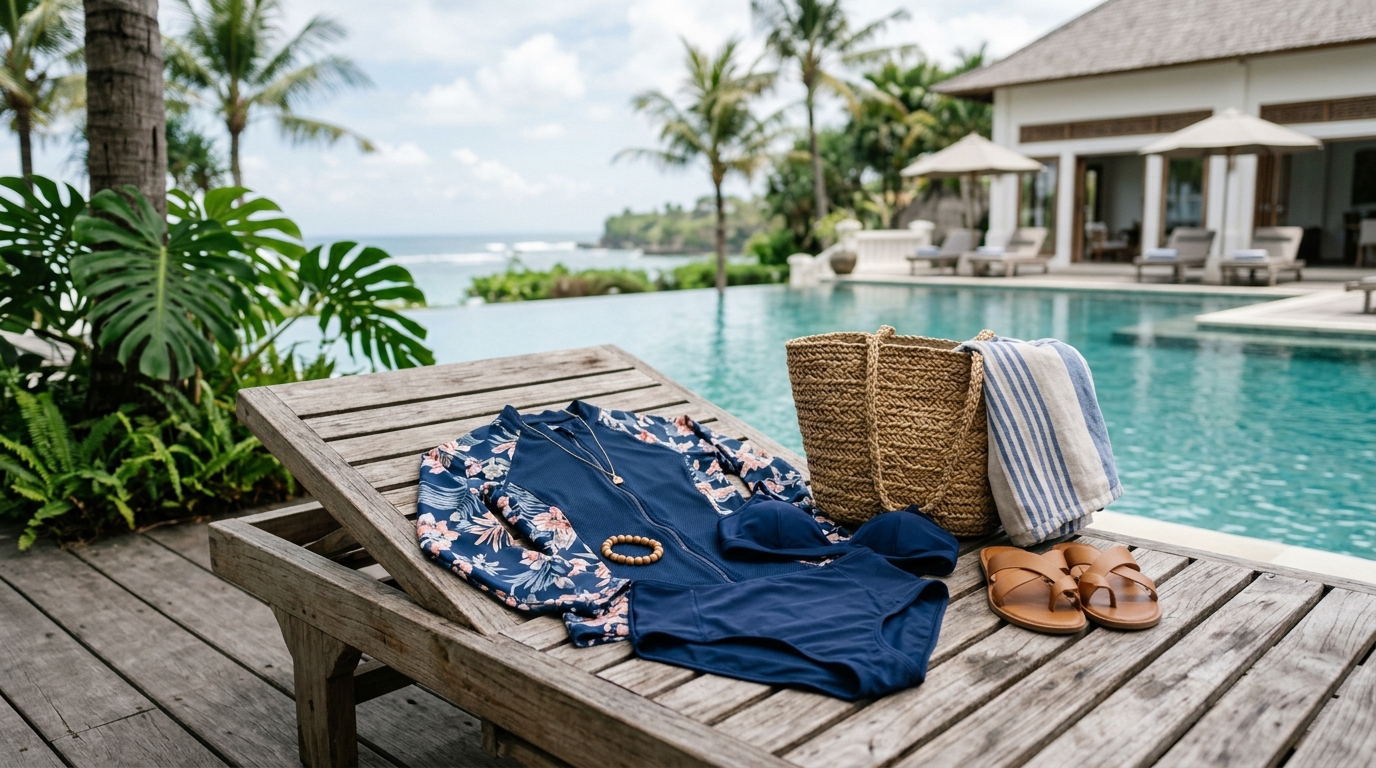
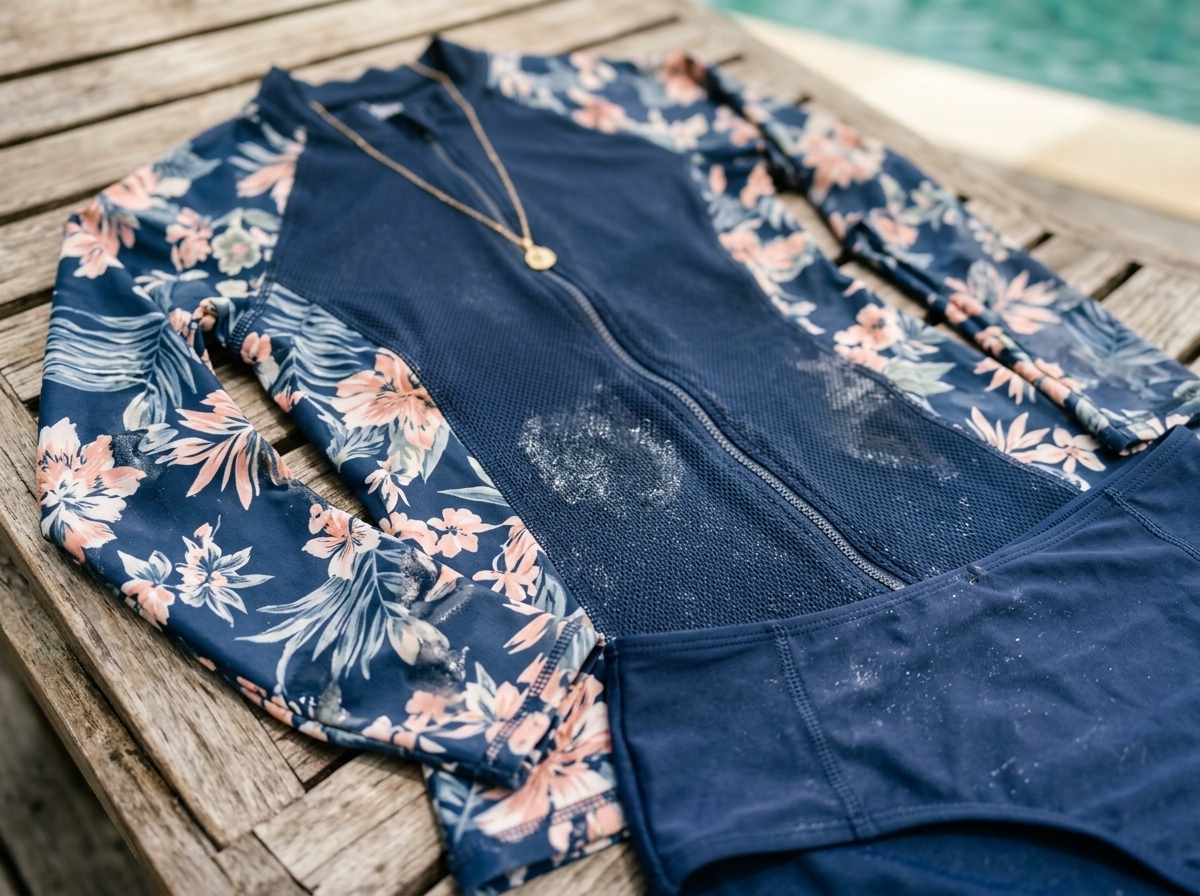
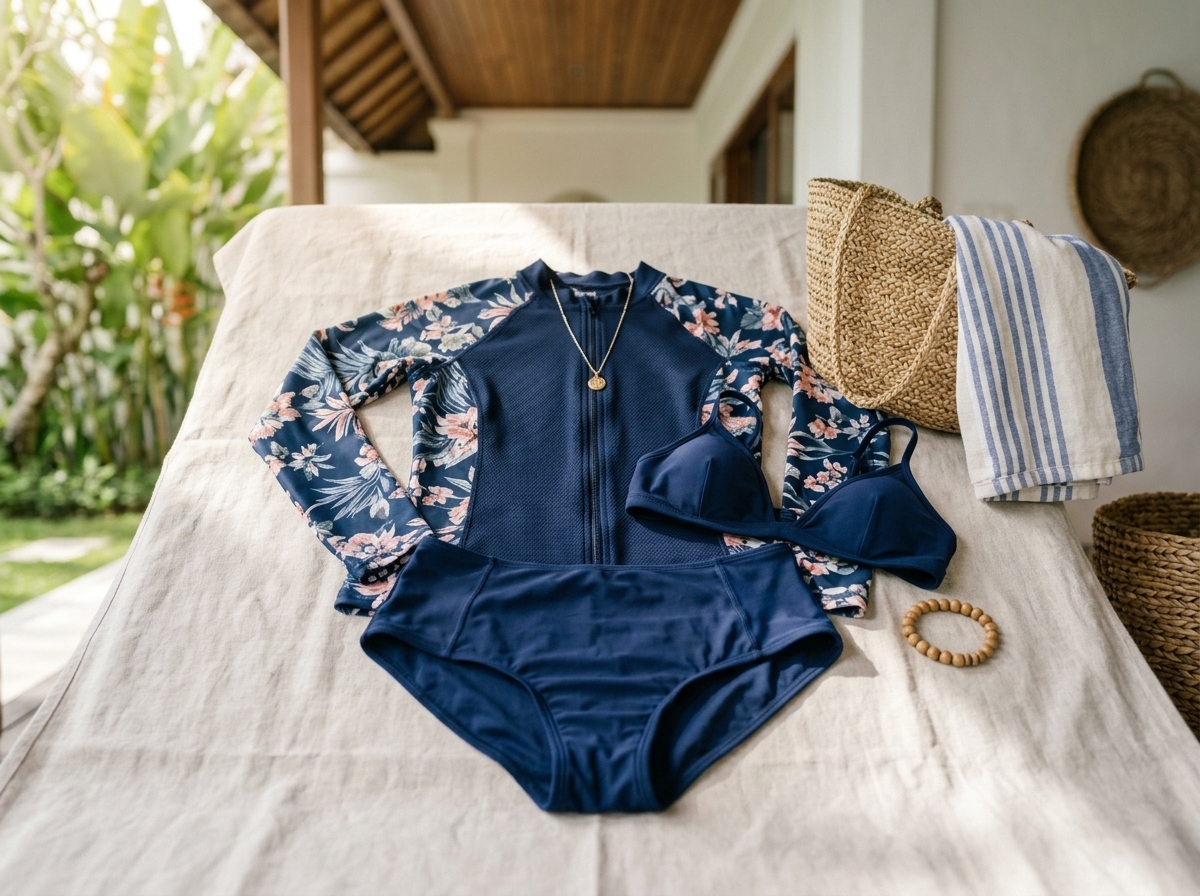
🛠️ Required Tools & Cleaning Agents
🔄 Alternative Detergents & Eco Tips
- White Vinegar → Alt: Commercial Chlorine Neutralizing Swimwear Wash (Formulated with sodium thiosulfate to instantly neutralize pool chlorine molecules)
- Dry Towel → Alt: Dry-roll microfiber mat (Absorbs water without twisting delicate spandex / lycra elastane fibers)
✨ Step-by-Step Care Instructions
Step 1: Rinse Under Cold Running Water Immediately in Shower
- Step into the shower wearing your swimsuit immediately after leaving the pool.
- Rinse thoroughly with cold tap water for 1-2 minutes to wash away pool chlorine chemicals.
- Never wrap wet chlorinated swimwear in plastic bags for hours (heat rapidly degrades elastane).
Step 2: Soak in Cold Vinegar Water for 5 Minutes
- Fill a sink basin with cold water and add 1-2 tablespoons of white vinegar.
- Submerge the swimsuit and soak for 5 minutes.
- Vinegar neutralizes alkaline chlorine bleach residues and locks in fabric dyes.
Step 3: Hand Wash Gently with Mild Neutral Soap
- Add 1 drop of mild neutral soap (or baby shampoo) and gently knead by hand.
- Gently press the fabric to flush out trapped pool water and body oils.
- Never scrub aggressively or use harsh laundry detergent powders.
Step 4: Roll Inside Dry Towel to Extract Water (Never Wring)
- Lay the rinsed swimsuit flat on a clean, dry bath towel.
- Roll the towel up with the swimsuit inside like a sushi roll.
- Press firmly with your hands to absorb water (NEVER wring or twist the swimsuit like a rag).
Step 5: Lay Flat to Dry in Well-Ventilated Shade
- Lay the damp swimsuit flat on a horizontal drying rack in a breezy, shaded area.
- Never hang by the shoulder straps (water weight stretches straps permanently).
- Keep away from direct sunlight, clothes dryers, and pool spin dryers.
🩺 Self-Diagnosis Guide
✅ Can be restored with care
- Strong chlorine smell lingering in swimsuit fabric after pool training
- Light sand particles and ocean salt accumulated in swimsuit lining mesh
- Swimwear fabric retaining its snug compression elasticity
❌ Reached end of lifespan (Proper disposal required)
- Spandex/elastane fibers rotted from chlorine (fabric feels baggy, wavy, and sheer/see-through)
- Internal rubber elastic bands in leg openings completely brittle and snapped
- Fabric color severely faded with transparent patches exposing skin
⚠️ Important Safety Precautions
- NEVER use hot water or tumble clothes dryers (melts spandex elastane fibers).
- NEVER use centrifugal spin dryers provided at public pools (tears and stretches seams).
- Do NOT leave wet swimwear sealed in hot plastic bags in cars (heat accelerates chlorine fiber rot).
💡 Swimwear Replacement Guide: 3 Key Technical Specs Before Buying
♻️ Reached end of lifespan?
Check local disposal regulations instead of forcing reuse.
❓ Frequently Asked Questions (FAQ)
Q. Why do swimsuits become thin, see-through, and baggy over time?
A. Pool chlorine is a powerful oxidizing bleach. Over time, it breaks down the polymer chains of polyurethane spandex (Lycra) fibers. The fibers snap, causing the fabric to lose elasticity and become translucent.
Q. Why are pool spin dryers bad for swimsuits?
A. Centrifugal pool extractors spin at extreme speeds, putting immense shearing force on delicate wet seams and stretching thin straps out of shape. Rolling in a towel is far gentler and safer.
Q. How does vinegar help protect swimwear?
A. Pool chlorine is alkaline, and vinegar is a mild acetic acid. A quick cold vinegar soak chemically neutralizes residual chlorine and seals dyed fibers, keeping colors vibrant.