How to Descale Steam Iron & Garment Steamer! Unclog Steam Nozzles in 15 Minutes
Step-by-step DIY descaling guide to eliminate white mineral scale, restore full steam pressure, and unclog nozzles on handheld garment steamers and steam irons using food-grade citric acid solution.
🛠️ Required Tools & Cleaning Agents
🔄 Alternative Detergents & Eco Tips
- Citric Acid → Alt: Distilled White Vinegar (1:1 with water) (Citric acid is completely odorless and highly recommended to avoid lingering sour fumes during steaming)
- Cotton Swabs → Alt: Interdental Brushes or Wooden Toothpicks (Use soft non-abrasive tools to avoid scratching internal soleplate coating)
- Filtered Water (for rinsing) → Alt: Distilled or Boiled & Cooled Water (Using low-mineral water significantly delays future limescale crystallization)
✨ Step-by-Step Care Instructions
Step 1: Mix Citric Acid Descaling Solution & Fill Water Tank
- Dissolve 1-2 teaspoons (5-10g) of food-grade citric acid into 200ml of lukewarm water until completely clear.
- Pour the descaling solution into the steamer water tank up to just below the MAX line.
- Securely close the rubber stopper and click the water tank firmly into the steamer body.
- Let the unit sit upright for 2-3 minutes to allow the acid solution to permeate the boiler chamber.
Step 2: Preheat & Discharge Continuous Steam to Dissolve Scale
- Ensure good room ventilation and plug the steamer into power to begin preheating.
- Once the ready indicator lights up, aim the nozzle safely into a washbasin or over an old towel.
- Engage the continuous steam trigger in 30-second bursts to expel loosened mineral sediment with vapor.
- Repeat steaming until approximately 1/4 of the solution remains, fully dissolving internal boiler scale.
Step 3: Detail Clean Nozzle Apertures & Soleplate Surface
- Unplug the steamer and let the soleplate cool to lukewarm touch for 3 to 5 minutes.
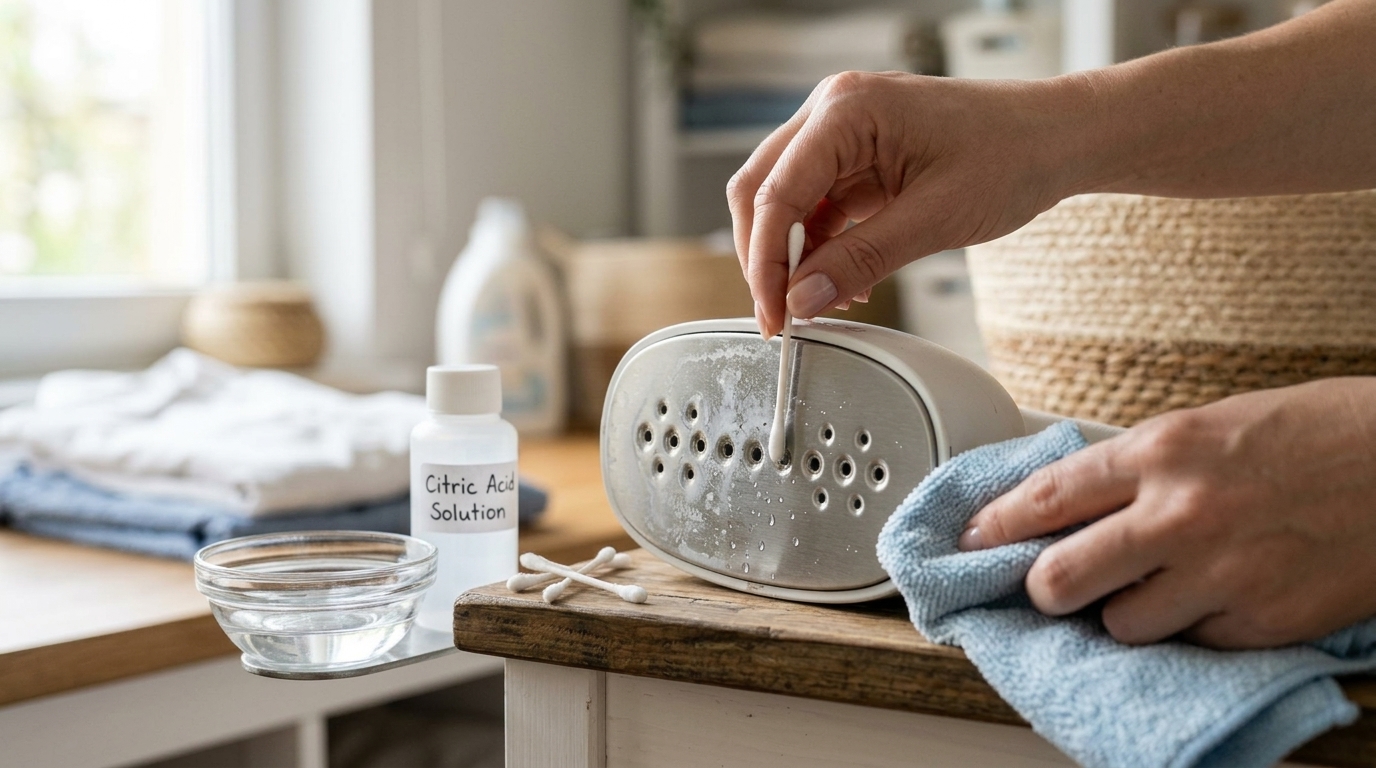
- Dip a cotton swab or interdental brush into remaining citric acid liquid and clean each steam orifice individually.
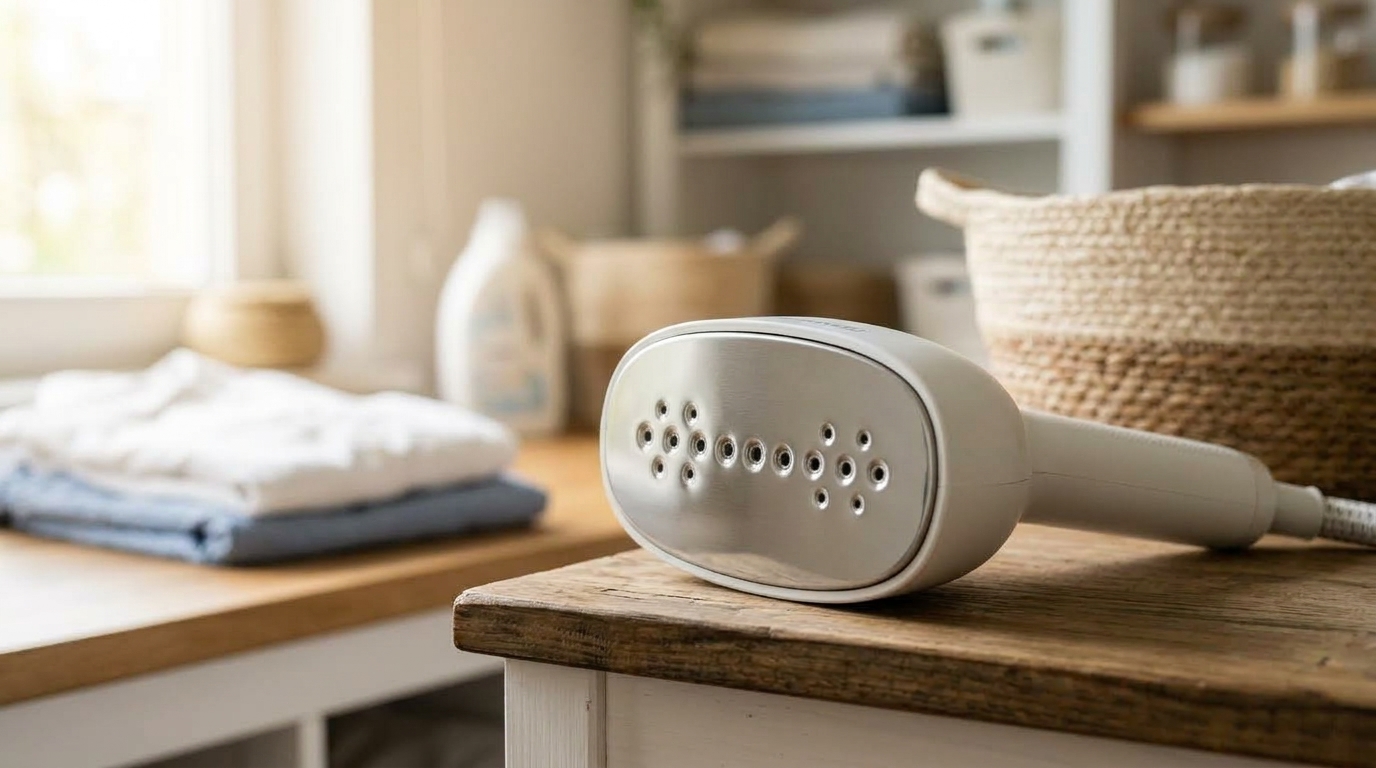
- Wipe away mineral stains from the stainless steel soleplate using a damp microfiber cloth.
- Use a wooden toothpick to gently dislodge stubborn mineral plugs without scratching the metal coating.
Step 4: Refill with Clean Water & Run 2 Flush Cycles
- Empty any leftover acid solution and rinse the reservoir thoroughly 2-3 times with fresh water.
- Fill the tank to maximum capacity with clean filtered or tap water and reattach.
- Turn on power and continuously steam into a towel for 1-2 minutes to flush out all residual citric acid.
- Verify that steam smells completely neutral with zero sour odor and vapor streams cleanly.
Step 5: Empty Residual Water & Thorough Air Dry Storage
- Power off and unplug the steamer, then dump out every drop of remaining water from the tank.
- Leave the fill cap open in a well-ventilated spot to air-dry internally for at least 12 hours.
- Dry the soleplate and exterior casing with a clean microfiber cloth to prevent water spots.
- Store upright in a dry closet or drawer away from high humidity.
🩺 Self-Diagnosis Guide
✅ Can be restored with care
- White powdery residue or mineral flakes spitting onto clothes during steaming
- Steam output sputtering irregularly or spray pressure noticeably diminished
- Visible white limescale buildup along water tank walls or fill port
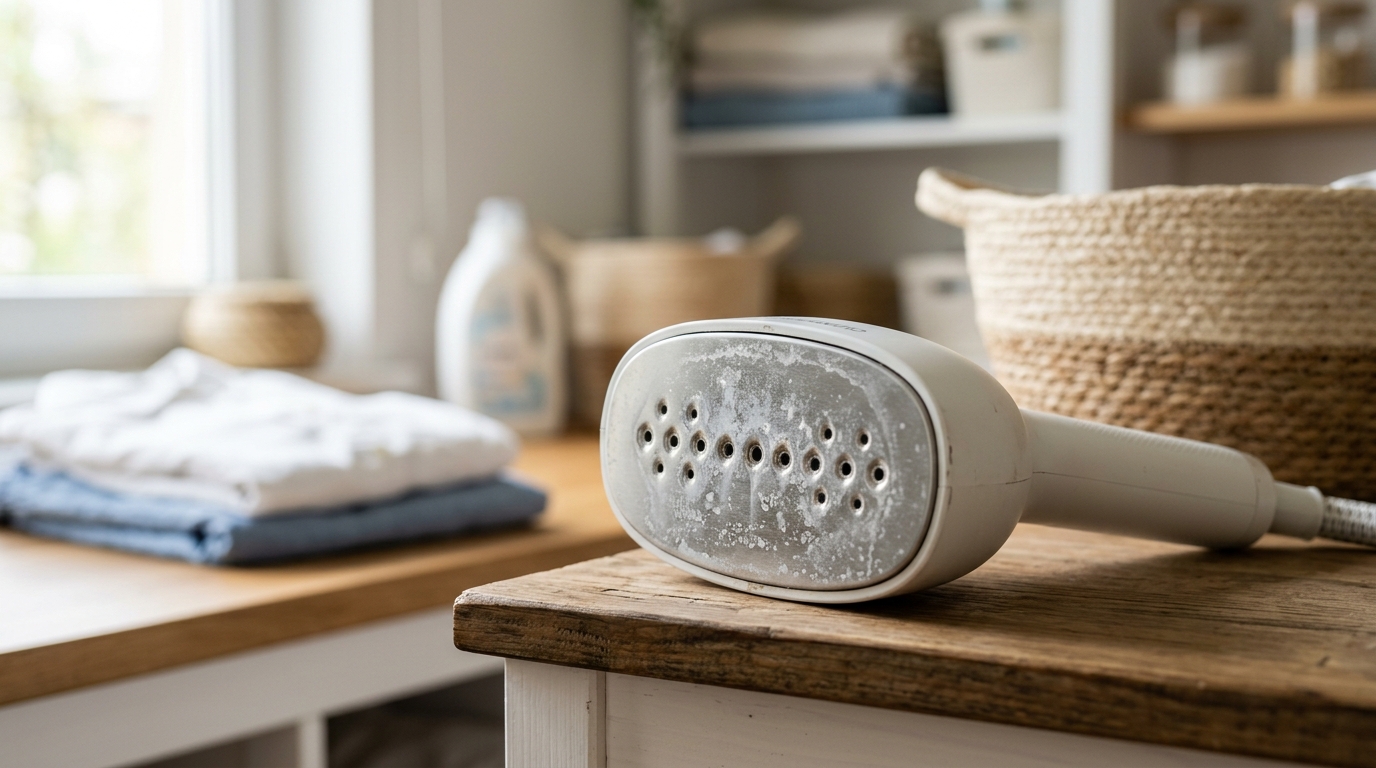
- Hardened white calcium rings crusting around steam soleplate nozzles
- Heating indicator light turns on and water pump motor buzzes normally
❌ Reached end of lifespan (Proper disposal required)
- Internal heating element completely burned out, soleplate stays cold
- Cracks in handle or outer housing causing scalding hot water leaks onto hands
- Damaged power cord or internal short circuit causing immediate circuit breaker trips
- Water pump motor completely seized, buzzing loudly without drawing any water
⚠️ Important Safety Precautions
- High Temperature Scald Hazard: Steam reaches over 100°C; never direct vapor towards people or hands, only aim at towels or basins.
- Do NOT Mix Other Chemicals: Never add bleach, detergents, essential oils, or fabric softeners to the water tank (causes toxic fumes and boiler corrosion).
- Avoid Metal Needles: Never insert sharp sewing needles or paper clips into nozzle holes, as this punctures internal seals.
- Protect Power Cord from Water: Keep electrical plug and cord junctions completely dry while filling and washing water tanks.
💡 Cost Efficiency & Professional Inspection Guide
💡 Steam Iron & Garment Steamer Replacement Guide: 3 Key Technical Specs Before Buying
♻️ Reached end of lifespan?
Check local disposal regulations instead of forcing reuse.
❓ Frequently Asked Questions (FAQ)
Q. Why is citric acid preferred over vinegar for descaling steamers?
A. While white vinegar dissolves limescale, heating it creates pungent sour fumes that spread throughout the house and linger in appliance hoses. Food-grade citric acid is completely odorless and provides superior calcium carbonate dissolution, making it the safest descaling agent for garment steamers.
Q. Should I use tap water or filtered water in my steam iron?
A. Filtered or distilled water is strongly recommended. Tap water contains dissolved minerals like calcium and magnesium, which crystallize into white chalky scale under high heat. Using filtered water dramatically reduces scale formation and keeps the steam pump running smoothly.
Q. How do I remove burned fabric residue from the steamer soleplate?
A. Make a paste with 2 parts baking soda and 1 part water. Spread it over the lukewarm (unplugged) soleplate, let it sit for 5 minutes to soften scorch marks, and wipe clean with a damp microfiber towel. This lifts baked-on synthetic fibers without scratching delicate Teflon or stainless coatings.
Q. How much does professional steam iron cleaning or service cost?
A. Official service centers (Philips, Tefal, Rowenta, etc.) typically charge between $15 and $25 for boiler descaling and nozzle inspection. Performing this monthly DIY citric acid descaling will save you service fees and keep your garment steamer operating at peak steam output for years.