Technical Running Clothes Sweat Odor Removal Guide | Vinegar Soak & Fabric Preservation
Performance sportswear laundry guide for stripping trapped sweat oils, sour ammonia odor bacteria, and preserving moisture-wicking synthetic fabric breathability.
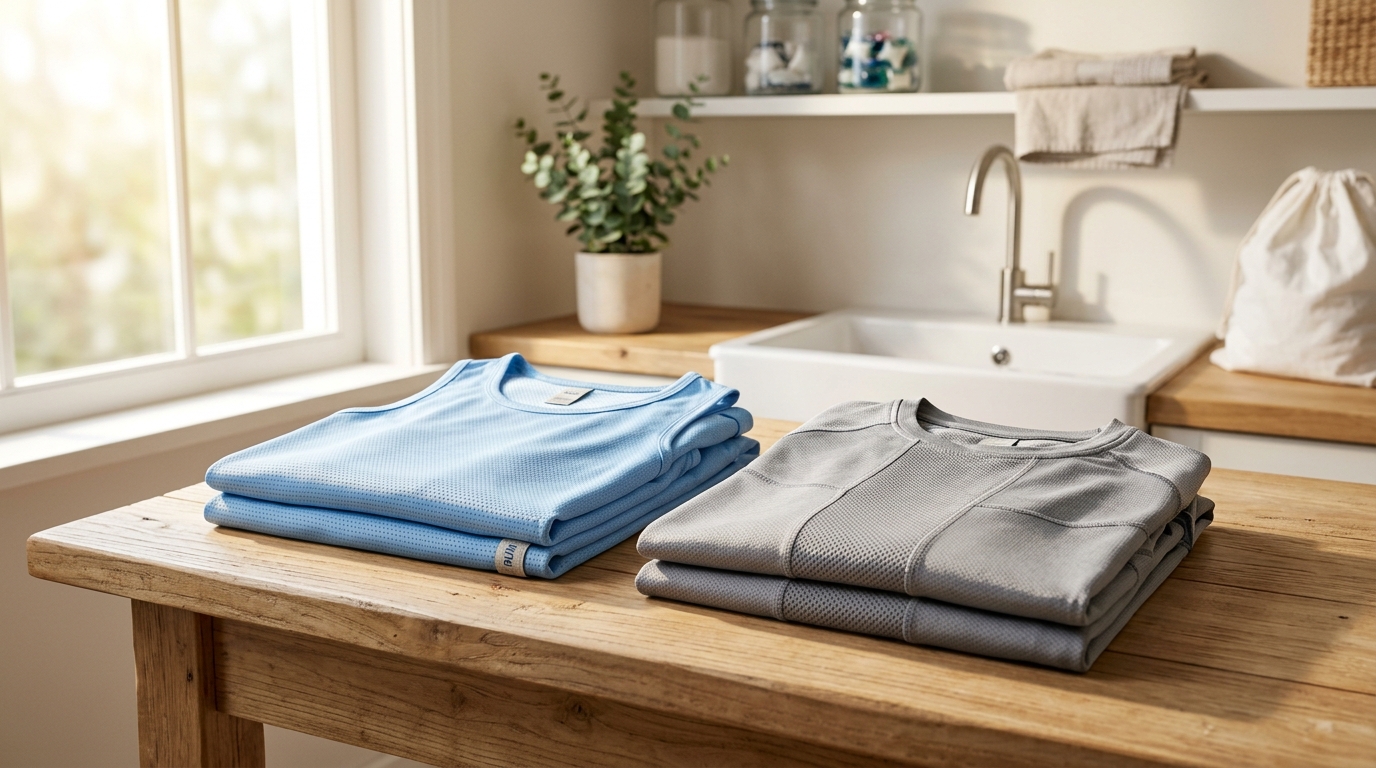

🛠️ Required Tools & Cleaning Agents
🔄 Alternative Detergents & Eco Tips
- Sports Detergent → Alt: Liquid Neutral Dish Soap (1 drop) (Effectively cuts body sebum oils adhering to polyester microfiber threads)
- White Vinegar → Alt: Active Enzyme Sport Laundry Booster (Breaks down protein sweat stains and eliminates deep-seated bacteria biofilms)
✨ Step-by-Step Care Instructions
Step 1: Rinse Sweat Out Immediately After Running
- Never leave sweaty running clothes crumpled in a dark gym bag or laundry hamper.
- Rinse sweaty gear under cold running water immediately after your run to flush out salt.
- Hang over a shower curtain rod to air dry if not washing immediately.
Step 2: Pre-soak in Diluted Vinegar Water for 15 Minutes
- Fill a washbasin with lukewarm water and add 1/2 cup (100ml) of white vinegar.
- Submerge sweaty running shirts, shorts, and socks, and soak for 15-20 minutes.
- The mild acid breaks down body sebum oils and kills Moraxella odor bacteria.
Step 3: Turn Garments Inside Out & Place in Mesh Laundry Bag
- Turn all technical clothing inside out where sweat and body oils contact the skin directly.
- Zip up zippers and close Velcro straps to prevent snagging delicate mesh.
- Place inside a fine mesh laundry wash bag.
Step 4: Machine Wash on Cold Gentle Cycle with Sports Detergent
- Use a specialized sports detergent (or mild neutral liquid detergent).
- Never add fabric softener (it coats fibers with a waxy film that locks in odors and ruins breathability).
- Wash on a gentle/sportswear cold water cycle (30°C or below).
Step 5: Air Dry on Hanger in Well-Ventilated Shade
- Hang garments on plastic hangers in a well-ventilated, shaded area.
- Technical synthetic fabrics dry rapidly within 2-3 hours without heat.
- Confirm fresh, crisp fabric with zero lingering sour odors.
🩺 Self-Diagnosis Guide
✅ Can be restored with care
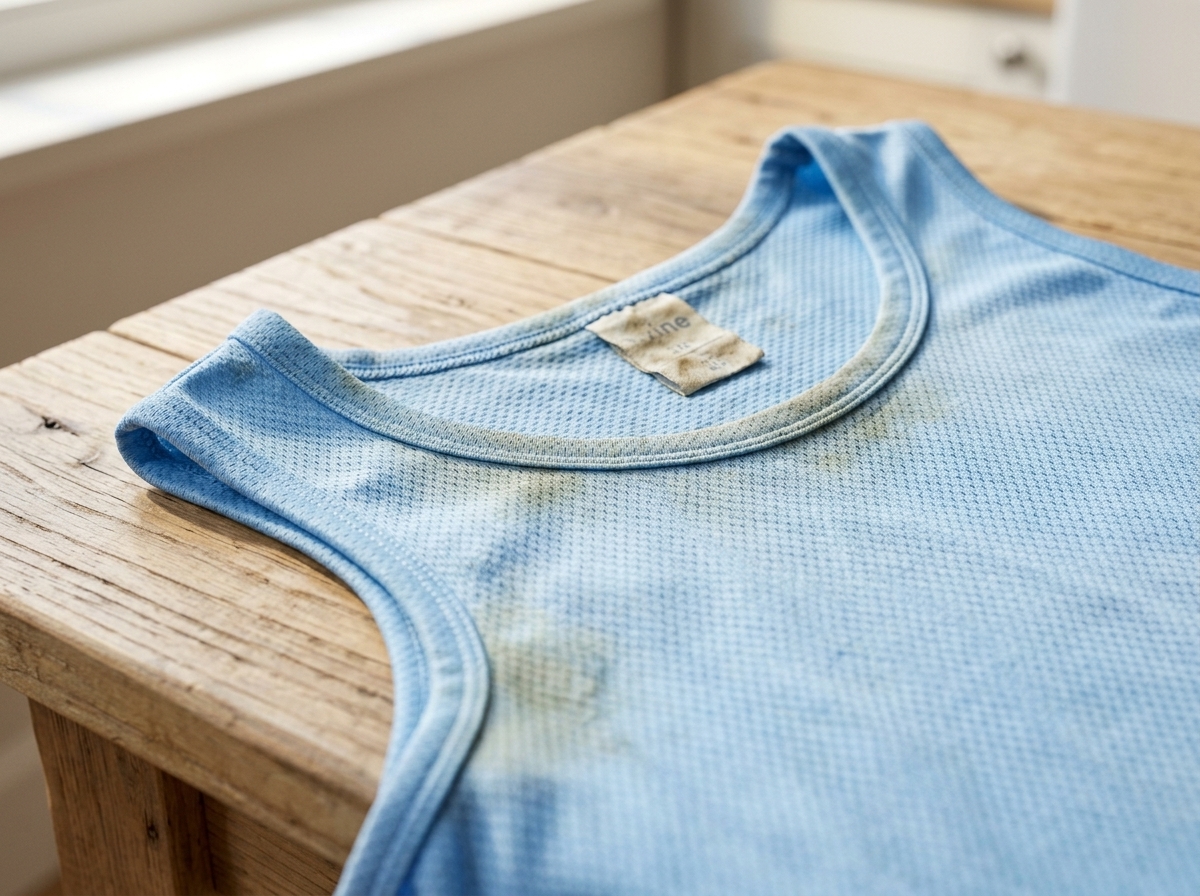
- Shirt smells fresh when dry but instantly emits sour sweat odor as soon as body warms up
- White salt sweat lines and yellow deodorant stains around armpits and collar
- Moisture-wicking polyester, nylon, and spandex fabric with elasticity intact
❌ Reached end of lifespan (Proper disposal required)
- Spandex/elastane fibers decomposed and snapping (wavy puckered seams and loss of compression)
- Reflective logos and heat-bonded seams completely peeling and detached
- Fabric worn paper-thin with chafing friction tears in high-abrasion zones
⚠️ Important Safety Precautions
- NEVER use fabric softeners or scent booster beads (coats fibers and traps permanent sweat odors).
- Do NOT tumble dry on high heat (melts spandex elastane fibers and shrinks shirts).
- Do NOT use chlorine bleach on color synthetic fabrics (causes discoloration and fiber rot).
💡 Running Apparel Replacement Guide: 3 Key Technical Specs Before Buying
♻️ Reached end of lifespan?
Check local disposal regulations instead of forcing reuse.
❓ Frequently Asked Questions (FAQ)
Q. Why do clean running shirts smell bad as soon as I start sweating?
A. Synthetic polyester fibers are hydrophobic and attract body sebum oils. When washed with regular detergent and fabric softener, a waxy film locks bacteria into the fibers. Body heat reactivates these bacteria, instantly releasing stale sweat odors. A vinegar strip removes this film.
Q. Why is fabric softener harmful to sportswear?
A. Fabric softeners coat yarn with a water-repellent silicone film. This clogs the microscopic channels that wick sweat away from your skin, destroying the garment's moisture-wicking breathability.
Q. How do I remove white sweat salt rings from black running gear?
A. Soak in lukewarm water with 2 tablespoons of white vinegar for 10 minutes, gently rub the salt line with your fingers, and rinse thoroughly in cold water.