Range Hood Filter Grease Cleaning & Degreasing Guide | Sodium Percarbonate Soak & Aluminum Mesh Restoration
Restore sticky, yellowish grease from aluminum range hood mesh filters using active oxygen bubbles from sodium percarbonate, dish soap, and hot water (60°C) without harsh scrubbing in 10 minutes.
🛠️ Required Tools & Cleaning Agents
🔄 Alternative Detergents & Eco Tips
- Sodium Percarbonate → Alt: Baking Soda + Dish Soap + Hot Water (Milder bubbling action than percarbonate but safe for regular, light grease maintenance)
- Large Tray or Basin → Alt: Heavy Duty Plastic Bag or Clean Trash Bag (If the filter is too large for the sink, seal it inside a plastic bag with hot water and detergent)
✨ Recommended Cleaning Supplies & Tools
※ As part of affiliate programs, a small commission may be earned from qualifying purchases.
✨ Step-by-Step Care Instructions
Step 1: Detach Range Hood Filter & Prepare Soaking Basin
- Turn off the range hood power and lights, pull down the filter latch, and remove the aluminum filter.
- Plug the kitchen sink or prepare a large flat plastic tray/heavy-duty bag large enough to submerge the filter.
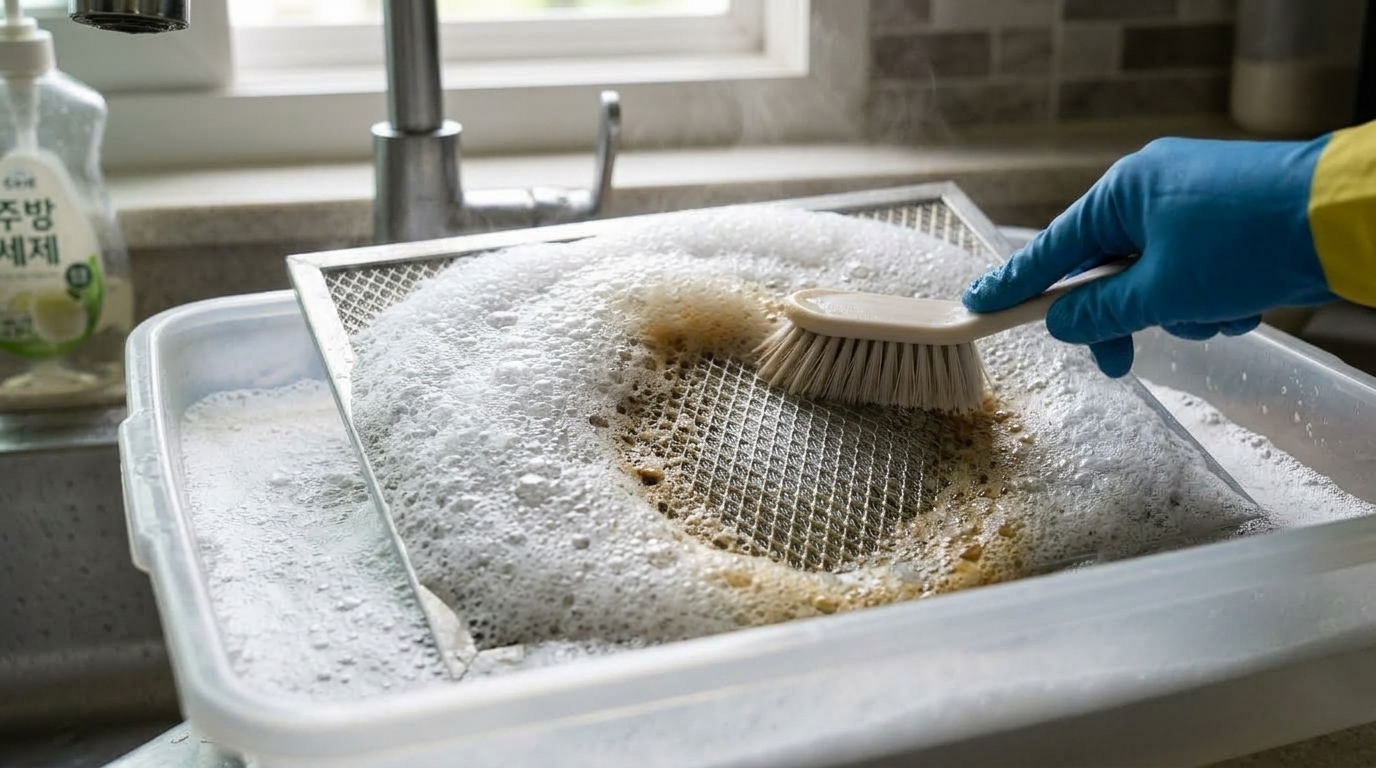
- Lay the aluminum filter flat so that the active oxygen foam covers all mesh surfaces evenly.
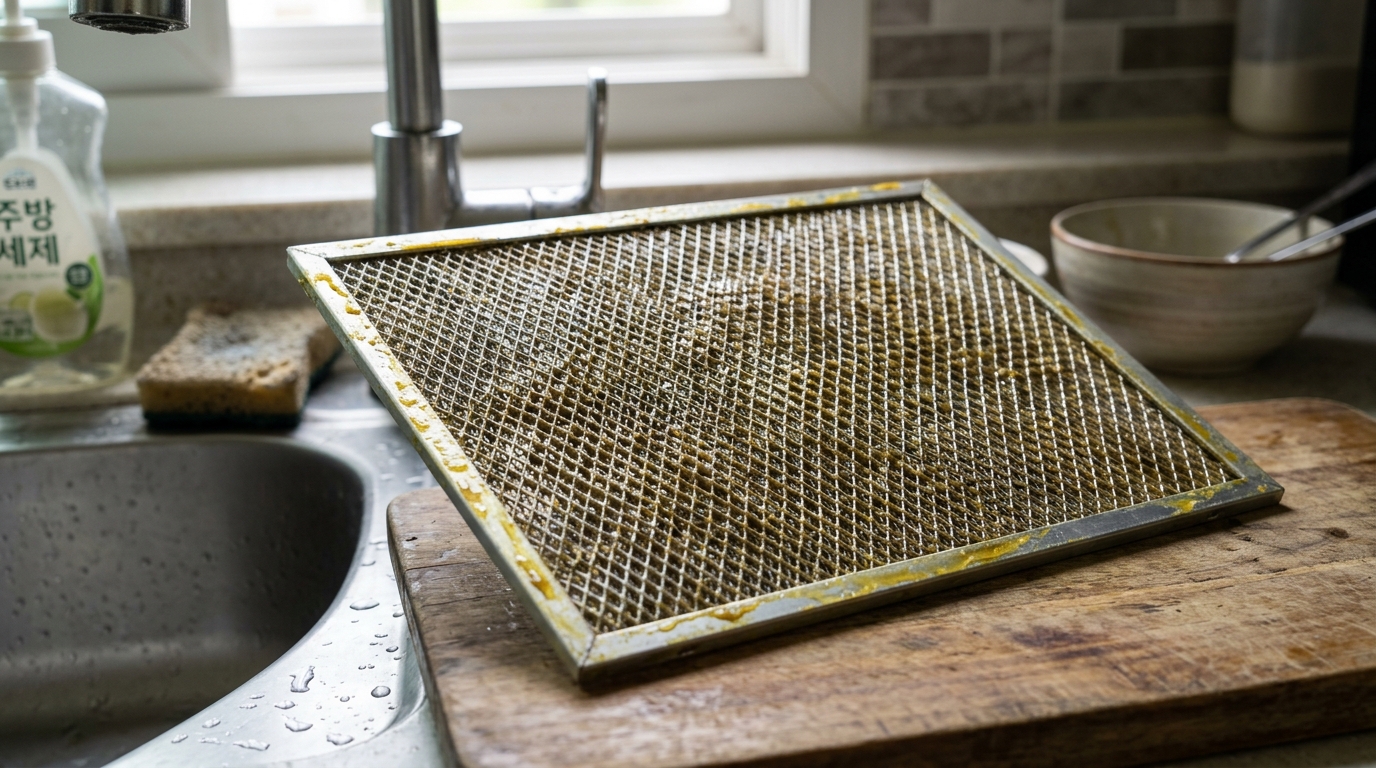
Step 2: Inspect Sticky Yellow Grease & Apply Cleaner
- Sprinkle 2-3 tablespoons of sodium percarbonate evenly over the entire surface of the filter.
- Add 2-3 pumps of regular liquid dish soap to enhance lipid emulsification and breakdown.
- Open kitchen windows for proper ventilation and always wear protective rubber gloves.
Step 3: Pour Hot Water (60°C+) & Soak in Active Oxygen Bubbles
- Slowly pour hot water (approx. 60°C) until the filter is fully submerged, activating vigorous oxygen foam.
- Allow the bubbling solution to soak for 10 minutes to melt and lift sticky polymerized oils.
- Use a soft-bristled brush or toothbrush to gently sweep along the mesh grain to loosen trapped residues.
Step 4: Warm Water Rinse & Residue Neutralization
- Rinse both front and back sides thoroughly under running warm shower water until grease runoff disappears.
- For extremely thick grease films, perform a quick second wash with a drop of dish soap.
- Rinse completely with clean water to prevent any alkaline residue or chalky white spots on aluminum.
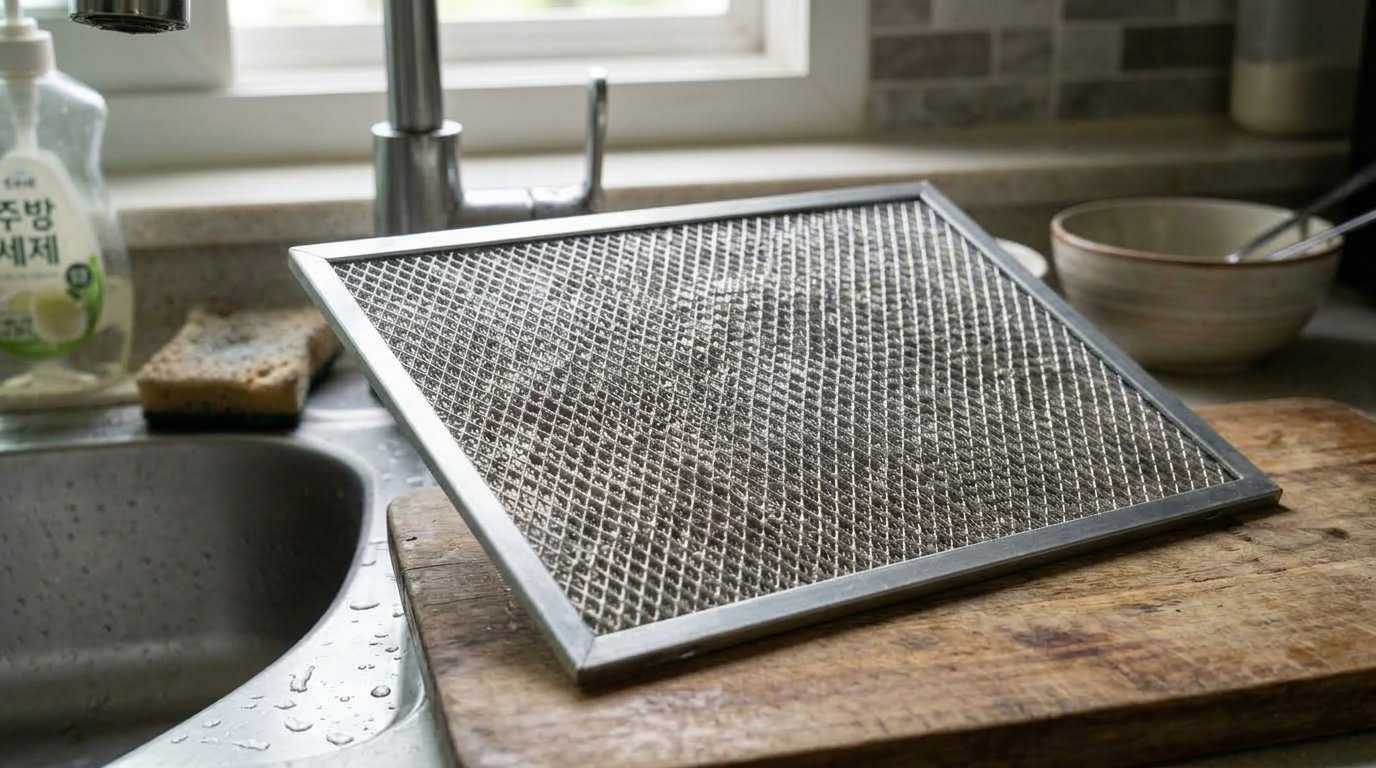
Step 5: Towel Dry & Natural Air Curing Before Remounting
- Gently dab and shake off excess water droplets from the frame and mesh with a clean microfiber cloth.
- Allow to air-dry completely in a well-ventilated shaded spot for 1-2 hours.
- Once thoroughly dry, snap the latch back into the range hood unit until it securely clicks into place.
🩺 Self-Diagnosis Guide
✅ Can be restored with care
- Sticky yellow grease and cooking vapor trapped on 3-layer aluminum mesh reducing suction power
- Filter frame and latch locking mechanisms fully intact and securely engaging
- Mesh screen completely free of tears, deep bends, or punctures
- Pungent stale oil odors trapped on metal surface without structural oxidation damage
❌ Reached end of lifespan (Proper disposal required)
- Aluminum mesh torn or punctured, allowing cooking grease to suck directly into exhaust motor
- Plastic latch handles or spring clips broken off, preventing secure mounting to hood chassis
- Heavy black corrosion and metal pitting caused by caustic soda or straight bleach exposure
- Heavy frame warping preventing flush alignment against the kitchen hood suction opening
⚠️ Important Safety Precautions
- Always open kitchen windows or turn on exhaust vents to avoid inhaling vapors generated when sodium percarbonate reacts with hot water.
- Never apply chlorine bleach or liquid drain unblockers as they aggressively corrode aluminum alloy meshes.
- Do not wash aluminum mesh filters in dishwashers with harsh alkaline detergents; high heat and caustic tablets cause irreversible grey discoloration.
💡 Cost Efficiency & Professional Inspection Guide
💡 Aluminum Range Hood Filter Replacement Guide: 3 Key Technical Specs Before Buying
❓ Frequently Asked Questions (FAQ)
Q. Can I wash aluminum range hood filters inside a dishwasher?
A. It is not recommended. Most range hood filters are made of multi-layered aluminum, which reacts poorly to aggressive dishwasher detergents and high-heat drying cycles, resulting in chalky white oxidation or permanent dull grey stains. Manual soaking in warm water with sodium percarbonate for 10 minutes is far safer and more effective.
Q. Why did my aluminum filter turn slightly dark or grey after soaking?
A. Sodium percarbonate is alkaline. If aluminum is left submerged in hot alkaline water for more than 20-30 minutes, surface oxidation can occur. Always limit soaking to 10-15 minutes maximum, and perform a quick rinse with diluted white vinegar or citric acid water to neutralize alkaline residues.
Q. How much does a professional kitchen range hood cleaning service cost in Korea?
A. A complete professional disassembly service covering motor blower fan degreasing, internal housing steam sanitization, and duct cleaning ranges between ₩60,000 and ₩100,000. Booking a professional deep clean every 1-2 years while maintaining mesh filters with this 1-2 month self-care routine maximizes hygiene while minimizing costs.