Dishwasher Descaling & Filter Deep Clean
Professional self-care guide to thoroughly eliminate white limescale mineral deposits, trapped food odors, and mildew from dishwasher tub walls, filters, and spray arms using citric acid and targeted cleaning cycles.
🛠️ Required Tools & Cleaning Agents
🔄 Alternative Detergents & Eco Tips
- Citric Acid Powder → Alt: 1 cup of distilled white vinegar (approx. 200ml) (Acetic acid naturally dissolves limescale deposits and neutralizes odors)
- Cleaning Toothbrush → Alt: Soft Crevice Brush or Non-scratch Pad (Safely scrubs fine filter mesh without puncturing delicate stainless wire)
- Nozzle Toothpick → Alt: Thin Paperclip or Sewing Needle (Clears clogged spray jet holes without widening plastic nozzle diameters)
✨ Step-by-Step Care Instructions
Step 1: Remove Lower Rack & Detach Filter Mesh and Spray Arms
- Pull out the lower dishrack completely from the dishwasher tub.
- Turn the cylindrical central filter handle counter-clockwise and lift out the assembly.
- Detach the lower rotating spray arm by twisting the center cap or gently lifting upwards.
- Transfer detached components to the kitchen sink for warm water pre-soaking.
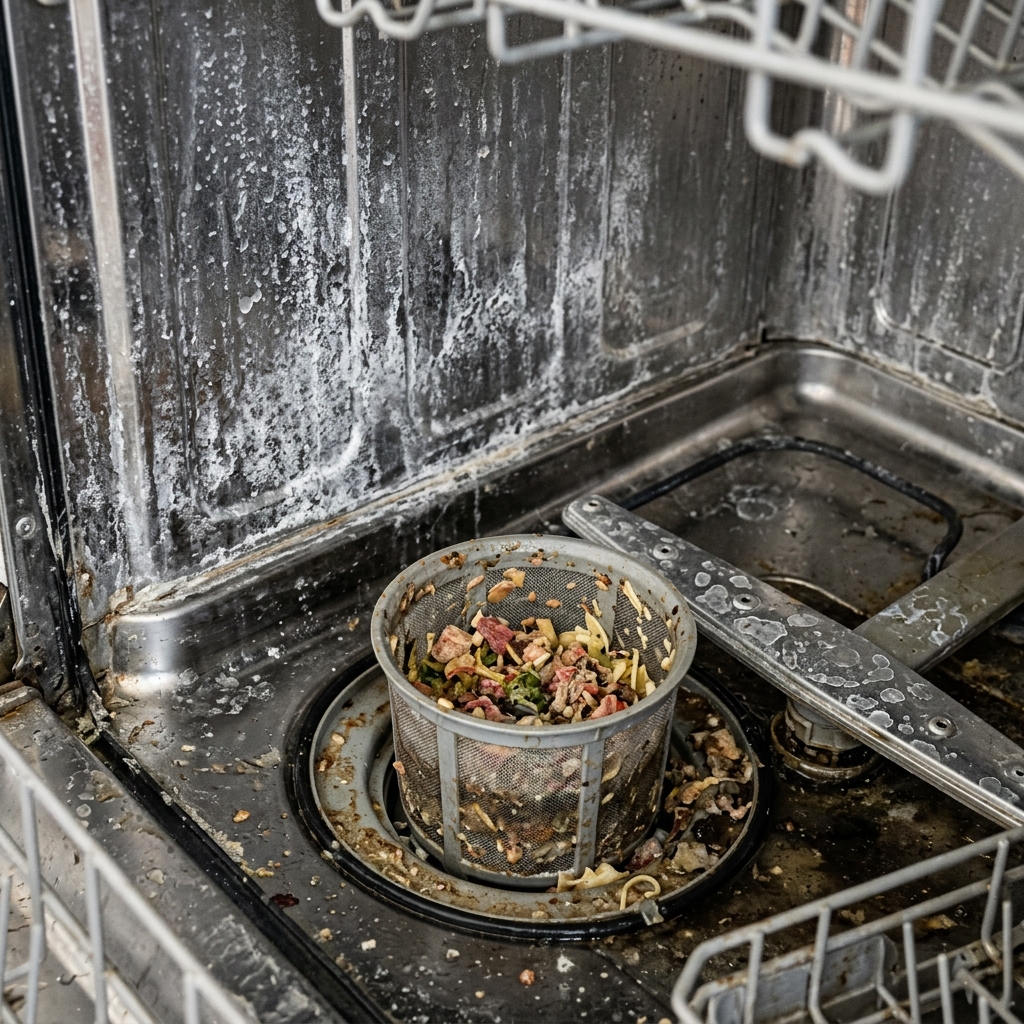
Step 2: Inspect Tub Contamination & Scrub Filter Mesh with Toothbrush
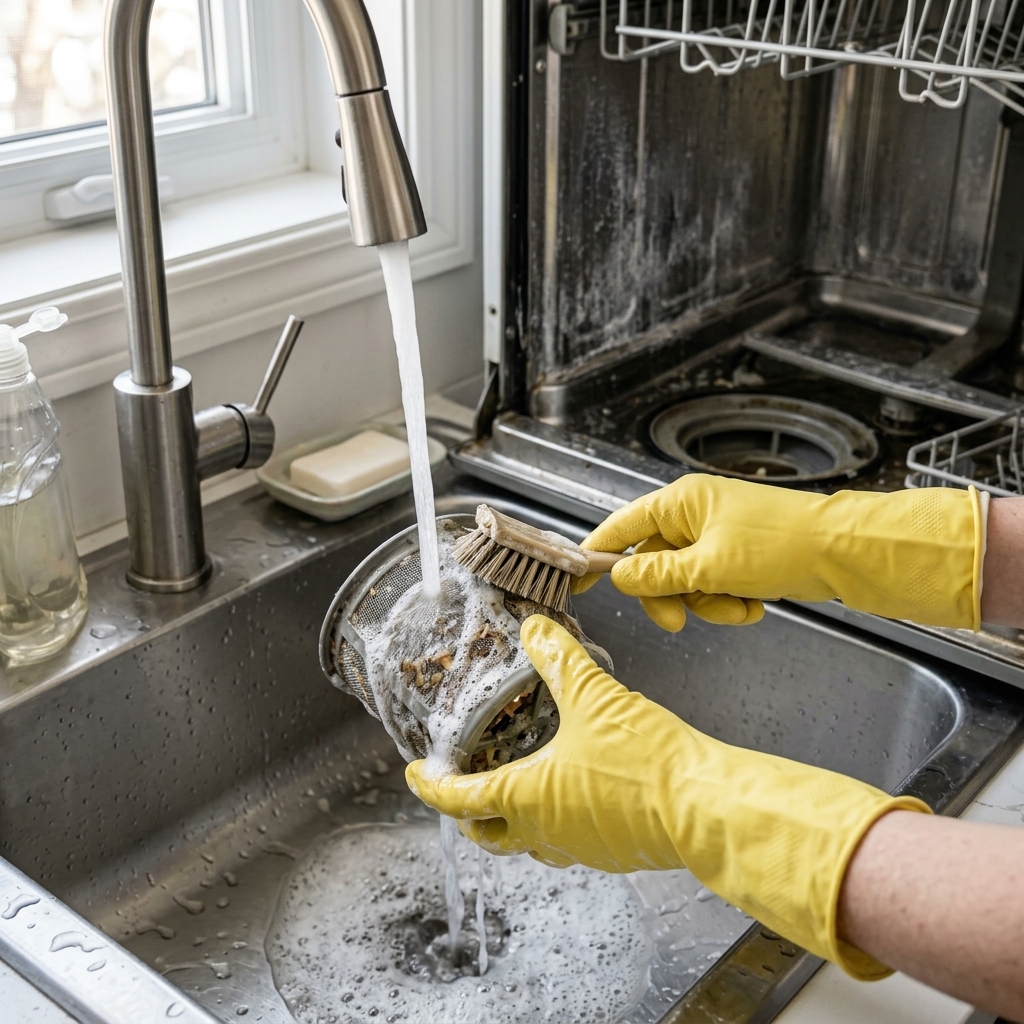
- Rinse the filter mesh under warm running water to flush out loose food debris and grease.
- Apply mild dish soap to a soft brush or toothbrush and thoroughly scrub both sides of the mesh.
- Wipe along the black rubber door gasket crevices with a damp microfiber cloth to remove slime.
- Clean out the bottom sump pit with paper towels to prevent drain blockages and bacterial build-up.
Step 3: Unclog Spray Arm Nozzle Holes & Reassemble Filter
- Use a toothpick or paperclip to gently dislodge trapped food particles from spray arm holes.
- Run faucet water directly into the central inlet to verify smooth, unhindered water flow from all jets.
- Reinstall the cleaned 3-stage filter and spray arms firmly until you hear a secure clicking lock.
- Ensure the filter is properly seated to prevent unfiltered wash water from entering the circulation pump.
Step 4: Add Citric Acid Powder & Run High-Temp Sterilization Cycle
- Place 30-50g (2-3 tablespoons) of citric acid powder inside a dishwasher-safe ceramic bowl on the top rack.
- If using white distilled vinegar, place a mug with 200ml vinegar upright on the upper rack (do not pour into detergent dispenser).
- Keep the dishwasher completely empty of dishes and select the 'Tub Clean', 'Sanitize', or highest temperature 'Heavy' cycle.
- The acidic hot water mist dissolves tough mineral limescale and neutralizes persistent fishy/musty odors.
Step 5: Open Door Immediately Post-Cycle & Complete Air Drying
- Open the door wide as soon as the cycle ends to let trapped hot steam evaporate instantly.
- Wipe residual water droplets along the door rim and bottom gasket using a clean, dry microfiber towel.
- Keep the door propped open by 10-15 degrees for at least 1 hour to ensure complete interior ventilation.
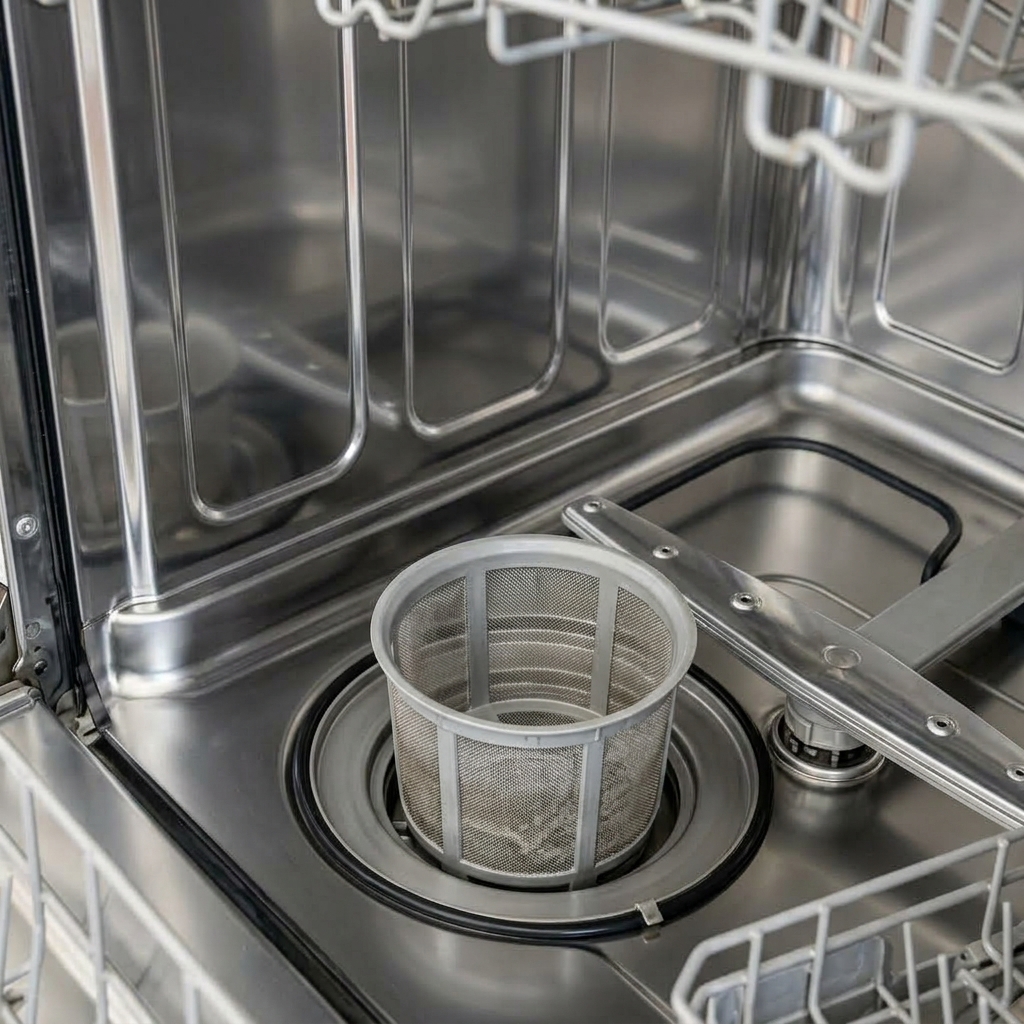
- Inspect the restored sparkling stainless steel finish, pristine filter, and fresh odorless interior.
🩺 Self-Diagnosis Guide
✅ Can be restored with care
- White chalky limescale mineral residue on stainless tub walls and glassware
- Stale moisture odor, fishy smell, or musty scent when opening the door post-cycle
- Decaying food sludge and grease trapped in the bottom cylindrical filter mesh
- Clogged spray arm nozzle holes causing reduced water pressure and spotty cleaning
- Mildew buildup and slimy residues along door rubber gasket creases
❌ Reached end of lifespan (Proper disposal required)
- Seized circulation wash pump motor failing to spray wash water entirely
- Continuous internal water leak triggering persistent LE/AE system fault codes
- Broken door hinge mechanism or damaged latch sensor preventing machine start
- Burned out heating element unable to heat wash water or run drying cycles
⚠️ Important Safety Precautions
- Never use standard manual dish soap inside dishwashers: Extreme suds will trigger water level sensor errors (OE/LE codes) and flood leaks.
- Avoid excessive citric acid dosage: Exceeding 50g per cleaning cycle may cause surface discoloration on interior metal components.
- Check spray arm locking: An improperly seated spray arm may detach during high-speed rotation and damage dishes or tub walls.
- Beware of hot steam scalds: Interior water temperatures reach 70-80°C during sanitize cycles; never force the door open while running.
💡 Cost Efficiency & Professional Inspection Guide
💡 Dishwasher Replacement Guide: 3 Key Technical Specs Before Buying
❓ Frequently Asked Questions (FAQ)
Q. Is it more effective to mix baking soda with citric acid for dishwasher cleaning?
A. No. Mixing alkaline baking soda with acidic citric acid triggers a neutralization reaction that diminishes their cleaning and descaling power. For dissolving mineral limescale, use citric acid or vinegar alone.
Q. Why do cloudy white spots remain on glassware even after washing?
A. This is caused by hard water mineral scale (calcium/magnesium) or insufficient rinse aid. Increase your rinse aid dispenser setting and run a monthly citric acid Tub Clean cycle to restore clarity.
Q. What is the difference between commercial dishwasher cleaners and natural citric acid?
A. Citric acid is an eco-friendly, cost-effective natural acid ideal for limescale removal and deodorizing. Commercial machine cleaner tablets contain added degreasers that provide extra strength against stubborn greasy sludge.
Q. How much does a professional dishwasher deep cleaning service cost?
A. Professional disassembly, high-pressure steam cleaning, and sanitization services for residential built-in dishwashers generally range between $60 to $100 depending on region and model capacity.