Wooden & Plastic Cutting Board Disinfection Guide | Coarse Salt & Vinegar Deep Sterilization
Safe kitchen hygiene guide for removing deep knife groove mold, raw meat bacteria, and pungent kimchi odors from wooden and plastic cutting boards using coarse salt scrub and white vinegar.
🛠️ Required Tools & Cleaning Agents
🔄 Alternative Detergents & Eco Tips
- Coarse Salt & Lemon → Alt: Baking Soda Paste (Gentle natural abrasive that deodorizes and lifts stubborn food pigments)
- Mineral Oil → Alt: Food-grade Beeswax Conditioner (Seals wood pores and prevents water from penetrating cutting board grain)
✨ Step-by-Step Care Instructions
Step 1: Rinse Board with Cold Water & Sprinkle Coarse Salt
- Rinse the cutting board with cold water (never hot water on raw meat boards to prevent protein coagulating).
- Sprinkle 1 to 2 tablespoons of coarse sea salt generously across the surface.
- Coarse salt acts as a natural non-toxic abrasive to scrub deep knife groove crevices.
Step 2: Scrub Surface Firmly with Half Lemon or Sponge
- Use half a cut lemon (or a clean sponge) to rub the salt firmly along the wood grain.
- Citric acid in lemon combined with salt dissolves stubborn grease and eliminates strong fish odors.
- Pay close attention to heavily used center cutting areas and perimeter grooves.
Step 3: Spray White Vinegar & Let Sit for 5 Minutes
- Spray white vinegar evenly across both sides of the cutting board.
- Leave undisturbed for 5 minutes to sanitize common foodborne bacteria (E. coli, Salmonella).
- The mild acid neutralizes alkaline odors and brightens discolored wood fibers.
Step 4: Rinse with Clean Water & Dry Upright in Well-Ventilated Shade
- Rinse the board thoroughly with lukewarm water to remove all salt and vinegar residue.
- Wipe excess moisture with a clean dry kitchen towel.
- Stand the board upright in a well-ventilated, shaded dish rack to air-dry completely on all sides.
Step 5: Apply Food-Grade Mineral Oil (Wood Boards Only)
- Once the wooden board is 100% dry, apply 1 teaspoon of food-grade mineral oil.
- Rub the oil evenly into the wood grain using a clean cotton cloth and let it absorb overnight.
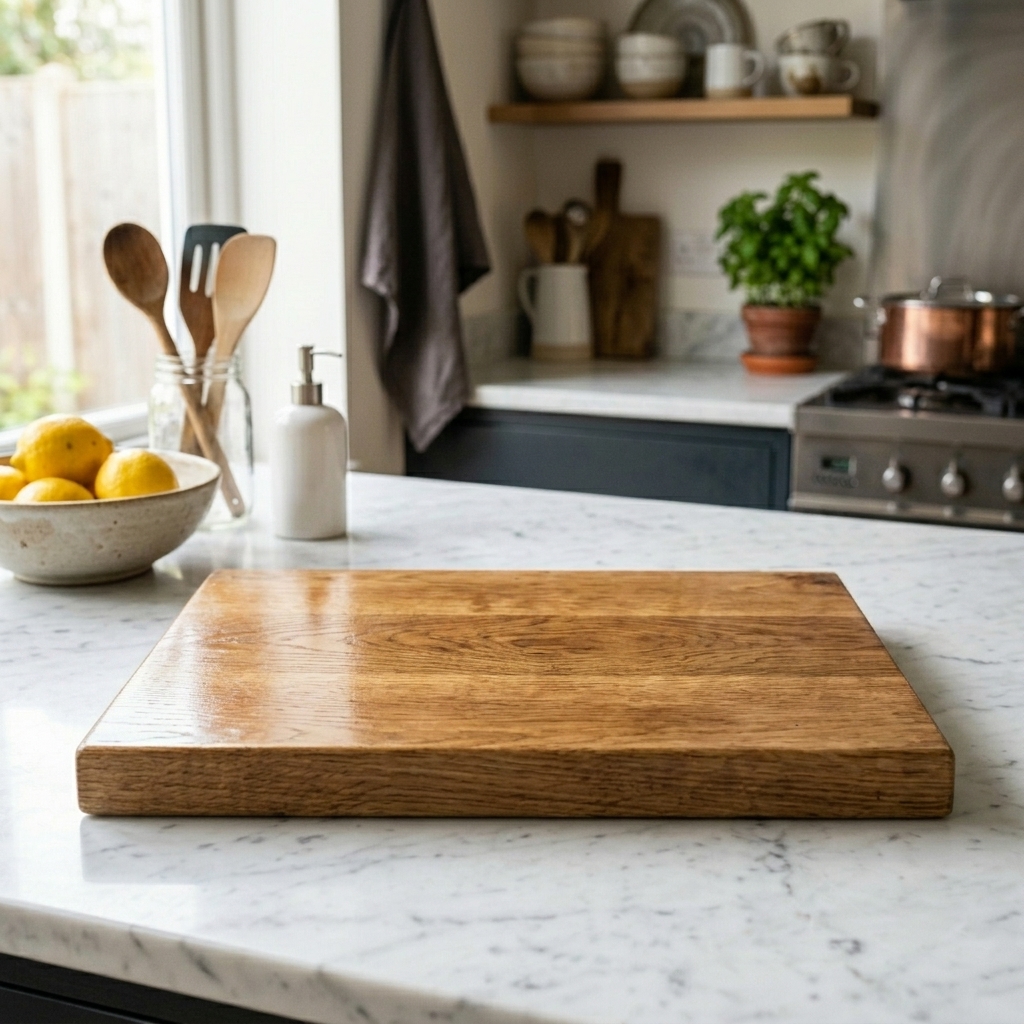
- Conditioning prevents moisture absorption, cracking, and future mold growth.
🩺 Self-Diagnosis Guide
✅ Can be restored with care
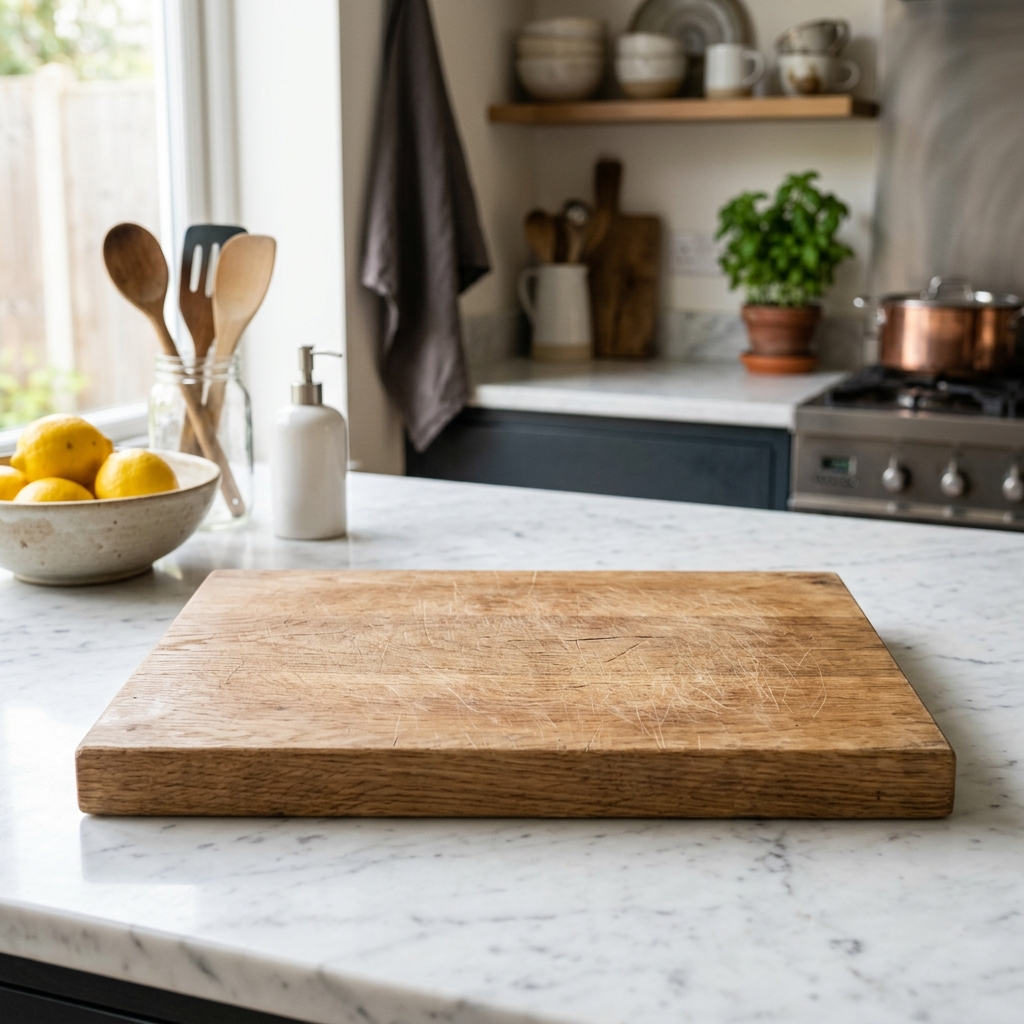
- Surface food stains (kimchi juice, turmeric, beet) and localized knife scratches
- Fish or garlic odors lingering on cutting board surface after standard washing
- Dry, dull wooden cutting board showing initial surface discoloration
❌ Reached end of lifespan (Proper disposal required)
- Deep black mold penetrating deep inside wooden fibers and cracks that cannot be sanded out
- Severely warped or split wooden board creating rocking instability during knife work
- Plastic board with deep gouges shedding plastic shavings into food
⚠️ Important Safety Precautions
- Do NOT put wooden cutting boards in dishwashers (high heat and long soaking destroy wood glue and warp grain).
- Do NOT use chlorine bleach on wooden boards (damages wood fibers and leaves toxic chemical residues).
- Do NOT dry cutting boards in direct scorching sunlight (causes rapid uneven shrinkage and splitting).
💡 Cutting Board Replacement Guide: 3 Key Technical Specs Before Buying
♻️ Reached end of lifespan?
Check local disposal regulations instead of forcing reuse.
❓ Frequently Asked Questions (FAQ)
Q. How do I remove pungent kimchi and garlic smells from plastic cutting boards?
A. Make a thick paste with baking soda and dish soap, spread it over the board, let it sit for 30 minutes, then rinse with vinegar. You can also place the board in sunlight for 2 hours to naturally bleach carotenoid kimchi pigments.
Q. What oil should I use to season wooden cutting boards?
A. Only use 100% food-grade pure mineral oil, refined walnut oil, or commercial cutting board wax (beeswax + mineral oil blend). Avoid vegetable oils (canola, olive, corn), as they oxidize and turn rancid.
Q. How often should I replace plastic and wooden cutting boards?
A. Plastic boards should be replaced every 1-2 years once deep knife grooves appear that trap bacteria. High-quality end-grain wooden boards can last over 10 years if properly oiled and sanded periodically.