Burnt Pot & Frying Pan Restoration Guide | Sodium Percarbonate & Baking Soda Boil Method
Complete restoration guide for lifting stubborn scorched pot bottoms and baked-on grease without damaging Teflon or stainless surfaces using sodium percarbonate effervescence.
🛠️ Required Tools & Cleaning Agents
🔄 Alternative Detergents & Eco Tips
- Sodium Percarbonate → Alt: Baking Soda + White Vinegar (1:1 ratio) (Effective mild alkaline fizzing reaction for lightly burnt cookware)
- Non-scratch Sponge → Alt: Soft Acrylic Yarn Scrubber (Protects non-stick and enamel coatings from scratching)
✨ Recommended Cleaning Supplies & Tools
※ As part of affiliate programs, a small commission may be earned from qualifying purchases.
✨ Step-by-Step Care Instructions
Step 1: Check Scorched Area & Fill with Water
- Allow the burnt pot or pan to cool down completely to room temperature.
- Fill with enough water to fully submerge the burnt residue (approx. 2/3 full).
- Never pour cold water into a scorching hot pan to prevent thermal shock warping.
Step 2: Add Sodium Percarbonate & Heat to Boil
- Add 2 tablespoons of sodium percarbonate (or baking soda for aluminum cookware).
- Heat on medium until it reaches a gentle boil, then lower heat to simmer for 10 minutes.
- Active oxygen bubbles will form and begin lifting the scorched carbon layers off the bottom.
Step 3: Soak & Let Active Bubbles Dissolve Carbon
- Turn off the heat and allow the solution to soak for 15-20 minutes as it cools.
- The chemical fizzing action dissolves oxidized grease and loosens stubborn carbon crust.
- Keep kitchen windows open or run the range hood during hot water effervescence.
Step 4: Gentle Sponge Scrubbing without Abrasives
- Discard the dirty murky water containing detached carbon flakes.
- Use a soft non-scratch sponge and mild dish soap to gently wipe away remaining residue.
- Avoid using harsh steel wool pads to protect the pot's polished metal surface.
Step 5: Rinse Thoroughly & Dry with Microfiber Towel
- Rinse thoroughly with warm running water until all alkaline soap film is gone.
- Dry immediately with a microfiber towel to prevent mineral water spots.
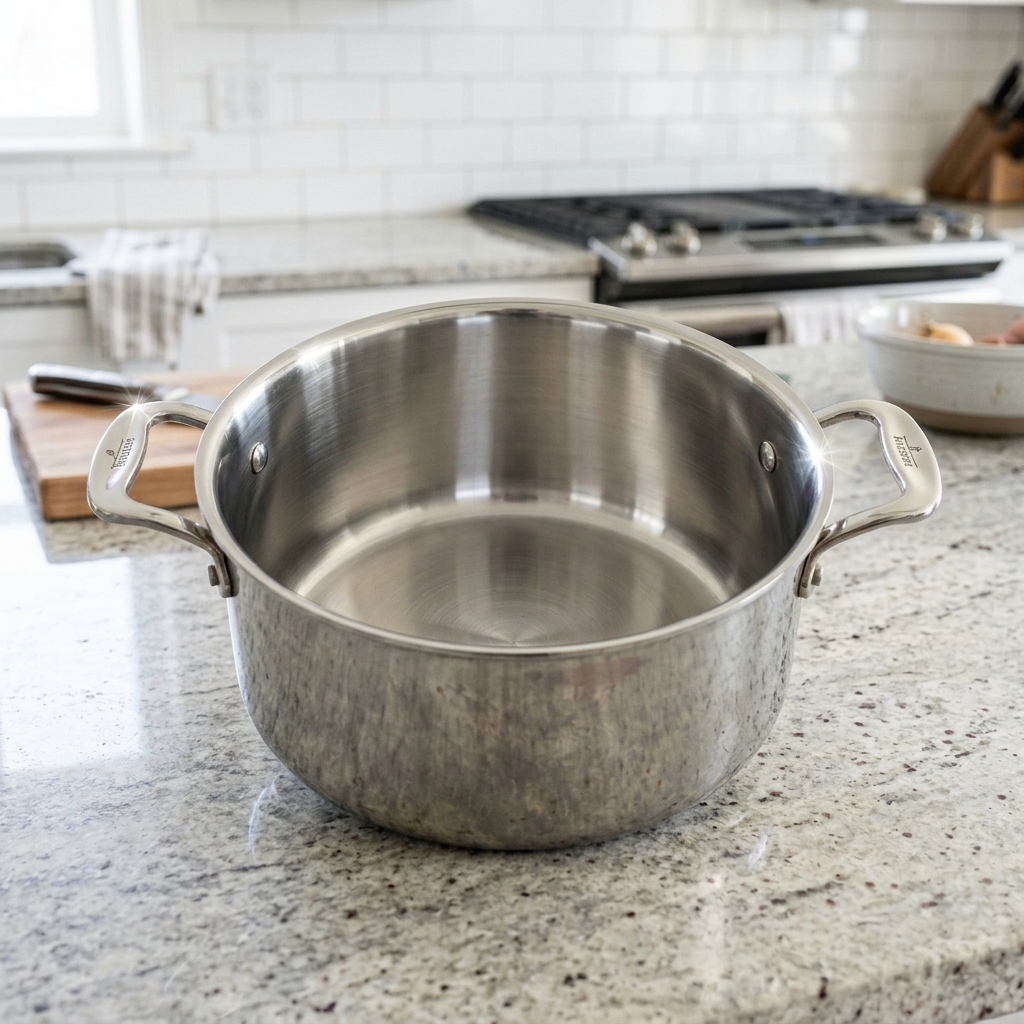
- Verify the restored, spotless cookware base ready for cooking.
🩺 Self-Diagnosis Guide
✅ Can be restored with care
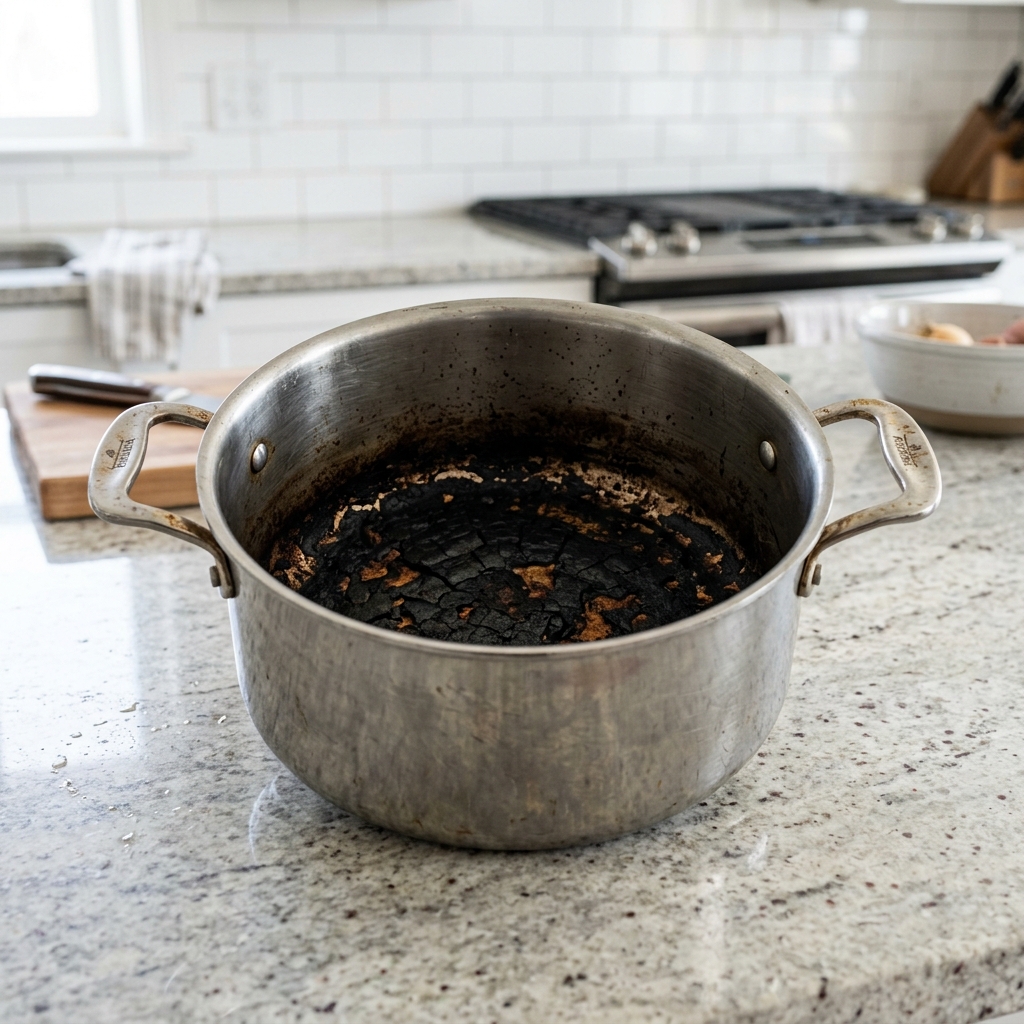
- Thick black charred food layers stuck to stainless steel or ceramic pot bottom
- Sticky polymerized grease film coating exterior bottom and side walls
- Discolored bottom surface that has not suffered metal perforation
❌ Reached end of lifespan (Proper disposal required)
- Non-stick PTFE / Teflon coating completely peeled off exposing bare metal
- Warped pot base causing uneven heat distribution on induction stovetops
- Deep pitting corrosion or cracks leaking liquid through the bottom
⚠️ Important Safety Precautions
- Do NOT use sodium percarbonate on raw unanodized aluminum pots (causes oxidation discoloration).
- Do NOT scrub coated non-stick pans with abrasive steel wool (destroys non-stick layer).
- Always wear rubber gloves when handling hot alkaline solutions.
💡 Stainless Steel Pot Replacement Guide: 3 Key Technical Specs Before Buying
♻️ Reached end of lifespan?
Check local disposal regulations instead of forcing reuse.
❓ Frequently Asked Questions (FAQ)
Q. Can I use sodium percarbonate on coated non-stick frying pans?
A. Yes, sodium percarbonate soak is safe for Teflon and ceramic coatings as long as you do not boil it for extended periods or use abrasive scrubbers. It lifts burnt grease chemically without scratching.
Q. Why should sodium percarbonate not be used on aluminum pots?
A. Aluminum is an amphoteric metal that reacts with strong alkalines like sodium percarbonate, resulting in surface oxidation, blackening, and corrosion. Use baking soda and dish soap on aluminum instead.
Q. What should I do if stubborn burnt spots remain after one boil?
A. Repeat the boiling process with 1 tablespoon of citric acid or make a thick baking soda paste, apply directly to the burnt spot for 30 minutes, and scrub with a soft sponge.