How to Dispose of Wine Coolers
- 1Freestanding wine cellars and mini refrigerators qualify as single-item free doorstep collection via Korea e-Waste Governance (1599-0903); ultra-compact Peltier cosmetic coolers under 1 meter can be dropped into Dong community center e-waste bins or bundled with 4 other small appliances; manual disassembly is strictly prohibited due to pressurized refrigerant gas and environmental hazards.
- 2Empty bottles and dry condensation water: Remove all stored wine bottles to avoid shattering, and wipe dry all internal condensate trays with a dry cloth.
- 3Tape internal shelves and power cords: Secure sliding wooden racks or wire shelves with masking tape to protect the glass door, and tape the power plug firmly to the cabinet side.
- ✓Book free doorstep pickup for single major appliances: Wine cellars and mini-fridges qualify as major refrigerator-class appliances; book single-item free doorstep collection via national e-Waste recycling (1599-0903).
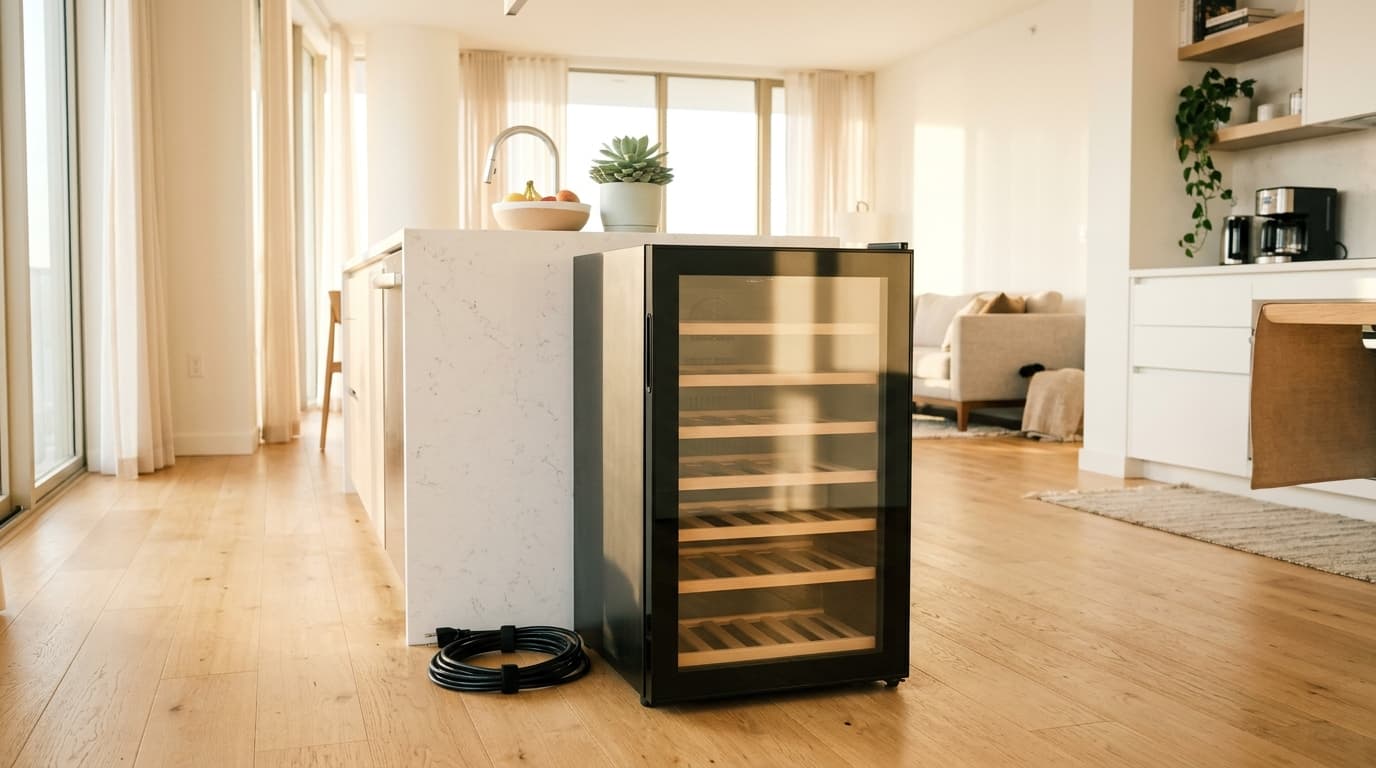
How to Dispose (6 Steps)
- 1
Empty bottles and dry condensation water: Remove all stored wine bottles to avoid shattering, and wipe dry all internal condensate trays with a dry cloth.
- 2
Tape internal shelves and power cords: Secure sliding wooden racks or wire shelves with masking tape to protect the glass door, and tape the power plug firmly to the cabinet side.
- 3
Book free doorstep pickup for single major appliances: Wine cellars and mini-fridges qualify as major refrigerator-class appliances; book single-item free doorstep collection via national e-Waste recycling (1599-0903).
- 4
Request retailer reverse-takeback when buying new: When purchasing a replacement wine cooler, request free reverse pickup of your old unit from delivery logistics crews.
- 5
Drop compact cosmetic coolers into e-waste bins: Mini thermoelectric cosmetic fridges without compressors (under 1 meter) can be deposited free into small e-waste collection bins.
- 6
Register bulky waste sticker for urgent disposal: If pickup schedules do not align, purchase a municipal bulky waste sticker via your local district office and set the unit outside.
Real-World Examples
Compressor-based mid/large wine cellars (24+ bottles): Schedule free single-item doorstep pickup via Korea e-Waste Governance (1599-0903).
Compact cosmetic mini coolers & car refrigerators: Deposit freely into Dong community center small e-waste bins or bundle with 4 other small appliances.
Replacement wine cooler purchases: Request complimentary 1-to-1 haul-away service from appliance delivery technicians.
Urgent relocation disposal for broken cellars: Purchase municipal bulky waste stickers (₩5,000–₩8,000) for outside collection.
Frequently Asked Questions
Q. Does a standalone single wine cellar qualify for free home e-waste pickup (1599-0903)?
A. Yes. Under Korea e-Waste Governance specifications, domestic wine cellars fall within the core 'Refrigeration Appliance' classification, granting them single-item eligible status. Technicians will visit your doorstep to collect a single unit for free without requiring a bundle of 5 small appliances.
Q. Can compressor-free cosmetic mini coolers be collected individually via free e-waste pickup?
A. No. Sub-1-meter thermoelectric cosmetic coolers or 12V portable car chillers are classified as small appliances. They require a bundle of at least 5 small household electronics for free home collection. To discard a single unit immediately without fees, drop it into your local Dong community center small e-waste collection bin.
Q. Can I dismantle the rear compressor from an old wine cellar to sell for scrap metal?
A. Strictly prohibited. Sealed cooling circuits contain pressurized refrigerants such as flammable R600a (isobutane) or HFCs. Puncturing pipes triggers dangerous pressurized gas blowouts, fire hazards, and environmental contamination. Cooling appliances must remain fully intact for safe recovery in licensed hermetic recycling chambers.