How to Dispose of Soda Maker & CO2 Gas Cylinder
- 1Carbonated water makers require separate disposal across three components: the dispenser body (manual vs.
- 2electric), the high-pressure aluminum CO2 cylinder, and the reusable pressure bottle.
- 3Pressurized CO2 cylinders pose severe explosion hazards in refuse compactors and must never be thrown into general trash or standard metal bins unvented; return them via manufacturer exchange programs or completely depressurize outdoors before scrap metal disposal.
- ✓Non-electric manual bodies are mixed-material waste for municipal trash bags, whereas plug-in electric models belong in small e-waste collection bins.
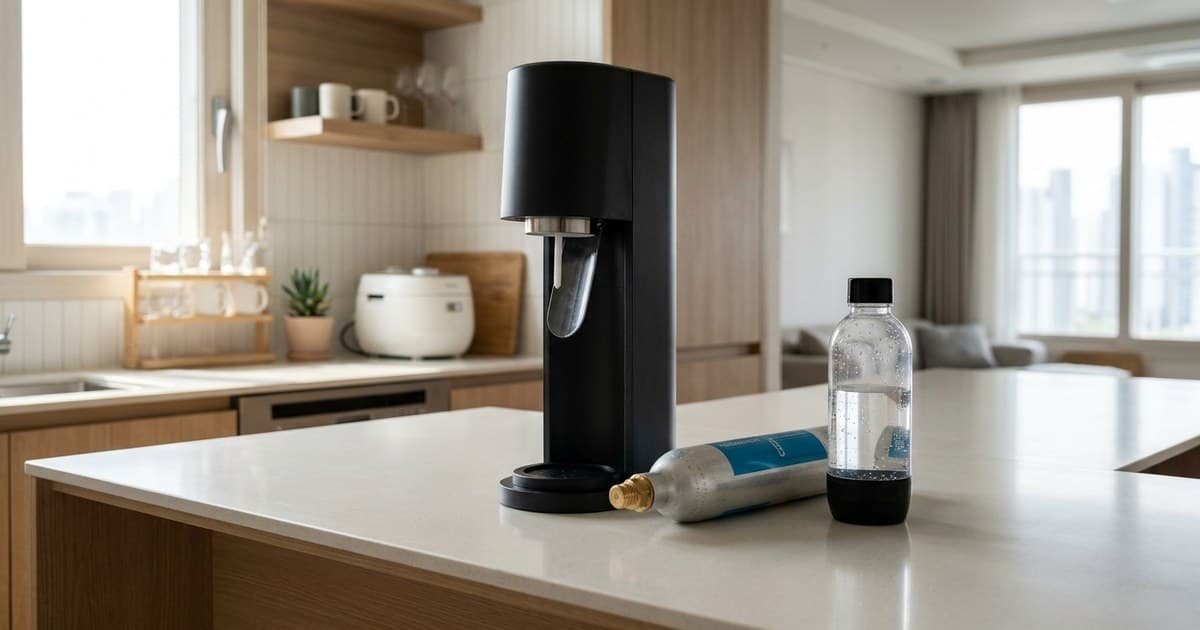
How to Dispose (5 Steps)
- 1
Detach Pressurized CO2 Cylinder: Open the rear compartment cover or unscrew the cylinder holder counterclockwise to safely detach the aluminum CO2 gas cylinder from the dispenser unit.
- 2
Return Cylinder to Vendor or Fully Depressurize Outdoors: Prioritize manufacturer refill exchange or cylinder return programs. If permanently discarding an obsolete cylinder, take it outdoors to a well-ventilated area and depress the central brass valve pin using a blunt tool until 100% of residual CO2 gas is completely vented, mark the cylinder as empty, and recycle via scrap metal yards. (Never attempt to drill or puncture thick high-pressure aluminum cylinder walls).
- 3
Recycle Expired Pressure Bottles & Carbonated Water Bottles: Empty all liquid contents, rinse the interior thoroughly with clean water, and peel off any exterior vinyl labels for film recycling. Compress single-use colorless transparent PET sparkling water bottles into dedicated clear PET bins; however, reusable soda maker pressure bottles with bonded colored ABS base caps or colored PET bottles must be sorted into general plastic recycling so they do not contaminate high-grade clear PET streams.
- 4
Dispose of Non-Electric Manual Dispenser Body: Mechanical push-button soda makers contain no power cords or circuit boards; they are composite products combining ABS plastic housing with brass pressure nozzles and steel springs. Do not place them in e-waste bins—discard in a 20L–50L general municipal trash bag or attach a small bulky waste sticker (approx. 2,000 KRW).
- 5
Recycle Plug-In Electric Models as Small E-Waste: Electric carbonated water makers equipped with power adapters, PCB controllers, and solenoid valves qualify as small electronic waste. After removing the CO2 cylinder and bottle, drop the main unit into apartment small e-waste bins or community centers for free.
Real-World Examples
Non-electric manual soda makers (SodaStream Terra, Art, Spirit, Duo): Remove cylinder and discard composite body in 20L–50L municipal trash bag or with bulky waste sticker
Plug-in electric carbonated water dispensers: Remove cylinder and bottle, then drop unit into residential small e-waste collection bin
High-pressure aluminum CO2 gas cylinders (425g / 60L): Return via vendor refill exchange or vent 100% of residual gas via top valve pin outdoors before scrap metal disposal
Expired reusable pressure water bottles (1L / 500mL PET or Tritan): Rinse syrup residue, detach cap, and place in plastic recycling
Frequently Asked Questions
Q. Can I put a manual SodaStream machine into a small electronic waste (e-waste) bin?
A. It depends on whether your model is manual or electric. Most household carbonated water makers are non-electric mechanical devices powered solely by CO2 cylinder pressure; because they lack power cords, motors, and circuit boards, they are not accepted in e-waste bins and must be discarded in general municipal waste bags or via bulky waste stickers. Only plug-in electric models with power adapters belong in small e-waste bins.
Q. Should I puncture an empty CO2 gas cylinder like a disposable butane can before recycling?
A. Never attempt to puncture a CO2 cylinder! Unlike thin sheet-metal butane canisters, soda maker CO2 cylinders are forged from thick-walled high-pressure aluminum alloy. Attempting to pierce the wall with a can opener, drill, or nail can cause severe injury. Always use manufacturer exchange programs or depress the top brass valve pin outdoors until all residual pressure is safely released.
Q. Should expired reusable carbonating bottles and single-use sparkling water bottles both go into clear PET bins?
A. They must be separated. Single-use colorless transparent sparkling water bottles should be emptied, rinsed, stripped of vinyl labels, crushed, and placed in dedicated clear PET bins. Conversely, reusable soda maker pressure bottles (which have bonded colored ABS base caps) and colored PET bottles contain pigments and mixed polymers that degrade clear PET recycling quality, so they must be sorted into general plastic recycling bins.