How to Dispose of Knife Sharpeners
- 1Manual pull-through sharpeners are inseparable multi-materials destined for regular trash bags; ceramic, synthetic, and natural whetstones are non-burnable mineral waste requiring protective newspaper wrapping and non-combustible municipal rubble bags; motorized electric sharpeners qualify for free small e-waste drop-off bins after battery removal.
- 2Categorization across 4 material and drive types: Distinguish between manual plastic pull-through sharpeners, ceramic/natural/synthetic whetstone blocks, motorized electric sharpeners, and 100% steel diamond sharpening plates.
- 3Wrapping whetstones in newspaper and disposing in non-combustible waste bags: Stone and ceramic sharpeners are non-flammable mineral debris prohibited from municipal incinerators; wrap broken blocks securely in thick newspaper or bubble wrap and discard in heavy-duty non-combustible rubble bags (special municipal bags) to protect sanitation handlers.
- ✓Discarding multi-material manual pull-through sharpeners in standard trash bags: Handheld pull-through sharpeners integrate plastic chassis with tungsten carbide and ceramic abrasive wheels that cannot be mechanically separated; discard directly into ordinary household garbage bags.
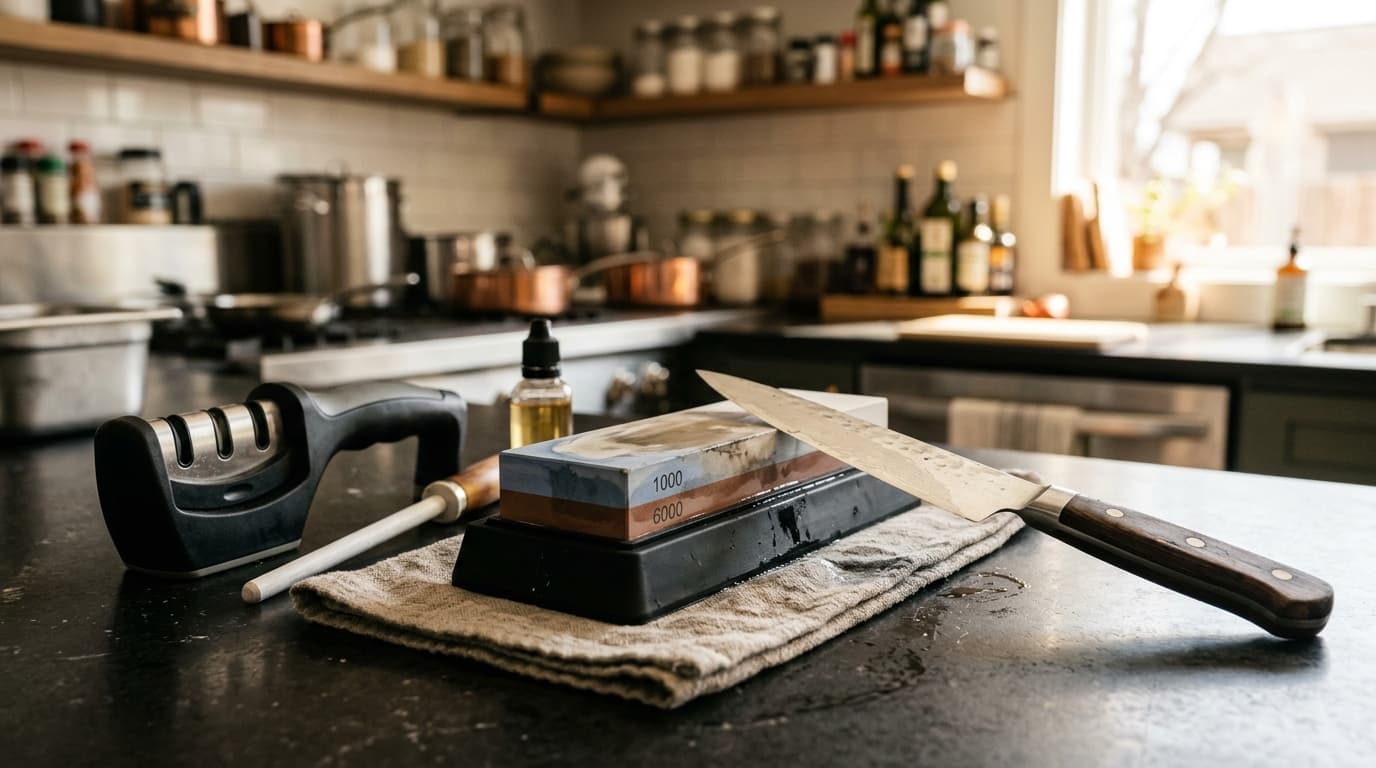
How to Dispose (6 Steps)
- 1
Categorization across 4 material and drive types: Distinguish between manual plastic pull-through sharpeners, ceramic/natural/synthetic whetstone blocks, motorized electric sharpeners, and 100% steel diamond sharpening plates.
- 2
Wrapping whetstones in newspaper and disposing in non-combustible waste bags: Stone and ceramic sharpeners are non-flammable mineral debris prohibited from municipal incinerators; wrap broken blocks securely in thick newspaper or bubble wrap and discard in heavy-duty non-combustible rubble bags (special municipal bags) to protect sanitation handlers.
- 3
Discarding multi-material manual pull-through sharpeners in standard trash bags: Handheld pull-through sharpeners integrate plastic chassis with tungsten carbide and ceramic abrasive wheels that cannot be mechanically separated; discard directly into ordinary household garbage bags.
- 4
Battery extraction and free small e-waste drop-off for motorized electric sharpeners: Remove AA/AAA alkaline batteries for dedicated hazardous battery boxes; deposit the motorized base unit into apartment or community center small e-waste collection bins free of charge.
- 5
Recycling 100% metal diamond sharpening plates with scrap steel: Flat diamond-electroplated stainless steel plates free of plastic backing should be wiped dry and sorted into municipal scrap metal and can recycling receptacles.
- 6
Evaluating broken whetstone repair and resurfacing: Premium Japanese synthetic whetstones fractured cleanly into pieces can be repaired using waterproof epoxy adhesive, clamped until fully cured, and flattened with a diamond flattening plate to extend tool lifespan or repurposed for pocketknife sharpening.
Real-World Examples
Handheld 3-stage pull-through sharpener (plastic body with carbide/ceramic wheels): Discard directly into standard municipal trash bags.
Cracked or dished dual-grit combination whetstone (1000/6000 grit): Wrap in newspaper and place into heavy-duty non-combustible waste rubble bag.
Electric motorized multi-angle knife sharpener: Drop into apartment or Dong community center small e-waste collection bin free of charge.
Solid steel diamond sharpening plate without backing: Clean off residual swarf and sort into scrap metal recycling.
Frequently Asked Questions
Q. Can whetstones be thrown into standard municipal trash bags?
A. Strictly prohibited. Whetstones consist of vitrified ceramics, silicon carbide, aluminum oxide abrasives, or natural mined rock. These non-combustible mineral items do not ignite in municipal waste incinerators and cause critical furnace grate clogging. Always place them inside designated heavy-duty non-combustible waste rubble bags available at district centers and local hardware marts.
Q. Should I disassemble abrasive wheels from plastic pull-through sharpeners to recycle the plastic casing?
A. No. Discard the unit entirely into regular household garbage bags. Handheld sharpeners feature factory-swaged carbide blades and ceramic rollers press-fit into ABS plastic housings. Because cross-contaminating materials cannot be safely separated by consumers, sorting facilities classify them as non-recyclable composite waste destined for waste-to-energy trash bags.
Q. How do I safely handle broken whetstone shards with razor-sharp edges?
A. Fractured synthetic whetstones develop extremely sharp glass-like facets. To protect waste handlers and prevent tears in heavy-duty rubble bags, wrap broken fragments thoroughly in 4–5 sheets of thick newspaper or shipping bubble wrap, seal with packaging tape, and place in the center of a non-combustible rubble sack.