How to Dispose of Kitchen Sponge & Steel Wool Scrubber
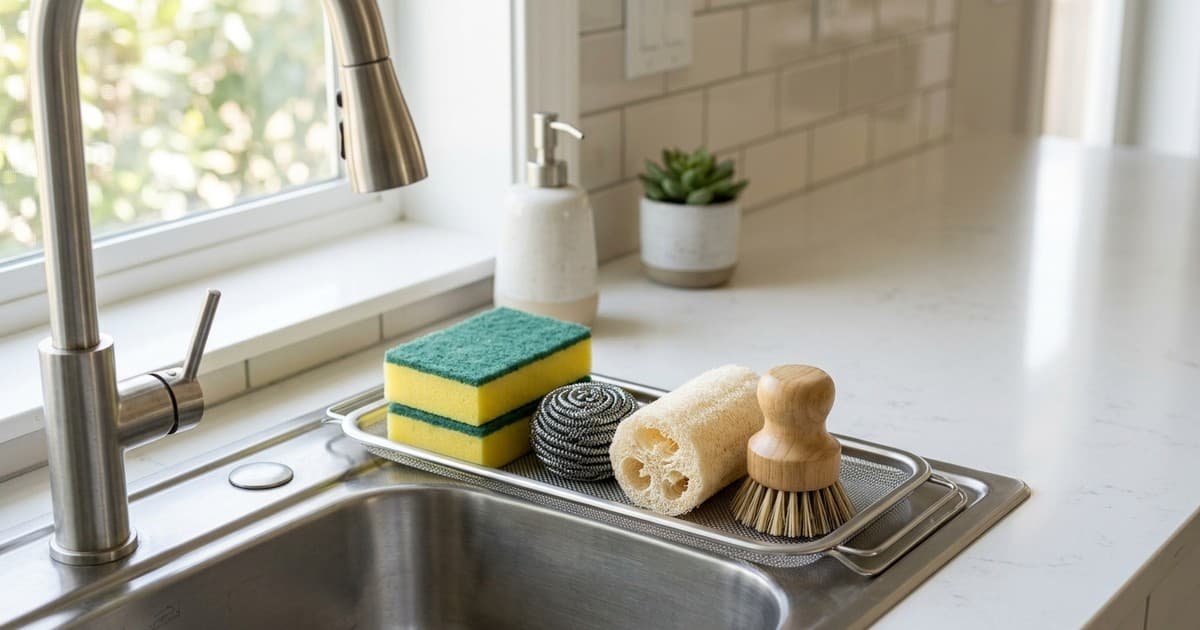
- 1Kitchen scrubbers are manufactured from diverse materials: polyurethane foam sponges, non-woven nylon abrasive pads, stainless steel wire coils, acrylic knit yarn, and natural dried luffa fibers.
- 2Steel wire scrubbers cannot be recycled with scrap metal because stubborn grease and food particles trapped between dense wire coils contaminate metallurgical smelting furnaces.
- 3Double-sided foam sponges and mesh scrubbers are bonded with synthetic adhesives and contaminated with microbial biofilm, making plastic pelletization impossible.
- 4Even 100% plant-based luffas cannot be processed as food waste due to tough fibrous strands that clog composting shredders.
- ✓All kitchen scrubbers must be incinerated in 100% municipal general trash bags.
How to Dispose (5 Steps)
- 1
Step 1: Recognize universal general trash rule - Acknowledge that steel scrubbers (not scrap metal), foam sponges (not plastic), and natural luffas (not food waste) all belong in general waste.
- 2
Step 2: Shake off food scraps & squeeze dry - Rinse away loose food debris, firmly wring out standing moisture, and avoid tossing soaking-wet sponges to prevent foul rotting odors in trash bags.
- 3
Step 3: Disassemble dish brush handles - If using handled cleaning brushes, detach separable bristle heads and discard frames in general waste (sort detachable metal springs into scrap metal).
- 4
Step 4: Upcycle for heavy grease cleaning (optional) - Before discarding, use worn scrubbers for final heavy-duty grime removal on stovetop grates, sink drain strainers, and bathroom floor traps.
- 5
Step 5: Seal and discard in municipal trash - Place the dried sponge into a standard municipal trash bag and set it out at your designated curbside collection point.
Real-World Examples
Double-sided abrasive foam sponge (polyurethane + non-woven nylon): 100% municipal general trash bag
Stainless steel scouring wire ball: 100% municipal general trash bag (never discard in scrap metal)
Nylon mesh scrubber / acrylic knit dishcloth: 100% municipal general trash bag (never plastic/vinyl)
Natural dried luffa plant / hemp dish scrubber: 100% municipal general trash bag (never food waste)
Melamine eraser foam pad: 100% municipal general trash bag
Frequently Asked Questions
Q. Why cannot stainless steel scrubbers be recycled as scrap metal if they are made of steel?
A. Fine-gauge steel wire coils entrap animal fat, burned carbon residue, and food fragments deep inside their matrix. In scrap metal recycling plants, these organic contaminants ignite grease flare-ups in shredders and pollute secondary smelting furnaces with ash. Because lightweight wire balls cannot be cleanly processed by magnetic sorters, regulations require them to be incinerated in general waste bags.
Q. Why can't 100% natural luffa scrubbers be thrown into food waste bins if they are biodegradable?
A. Korean food waste processing facilities grind organic matter into animal feedstock and organic compost. Dried luffa consists of tough, lignified cellulose vascular networks that fail to decompose rapidly and wrap around mechanical grinder blades, causing costly equipment motor failures. Just like corn husks, walnut shells, and coconut rinds, fibrous natural plant scrubbers must be incinerated in general trash bags.
Q. Can microwaving or boiling a kitchen sponge sterilize it and extend its lifespan?
A. Microwaving synthetic foam sponges risks fire hazards, toxic fumes, and microplastic breakdown exceeding polymer heat thresholds. Steel wool must never enter a microwave due to violent electric arcing and fire hazard. While soaking in warm water with oxygen bleach temporarily suppresses surface bacteria, it cannot eliminate microscopic microbial biofilms inside sponge pores; replacing sponges monthly remains the safest standard.