How to Dispose of Fire Extinguisher
- 1Fire extinguishers are pressurized vessels containing chemical dry powder agents.
- 2Discarding them in regular trash or metal recycling is strictly prohibited due to explosion hazards.
- ✓They must be disposed of as municipal bulky waste with a disposal sticker/permit or dropped into designated community center bins.
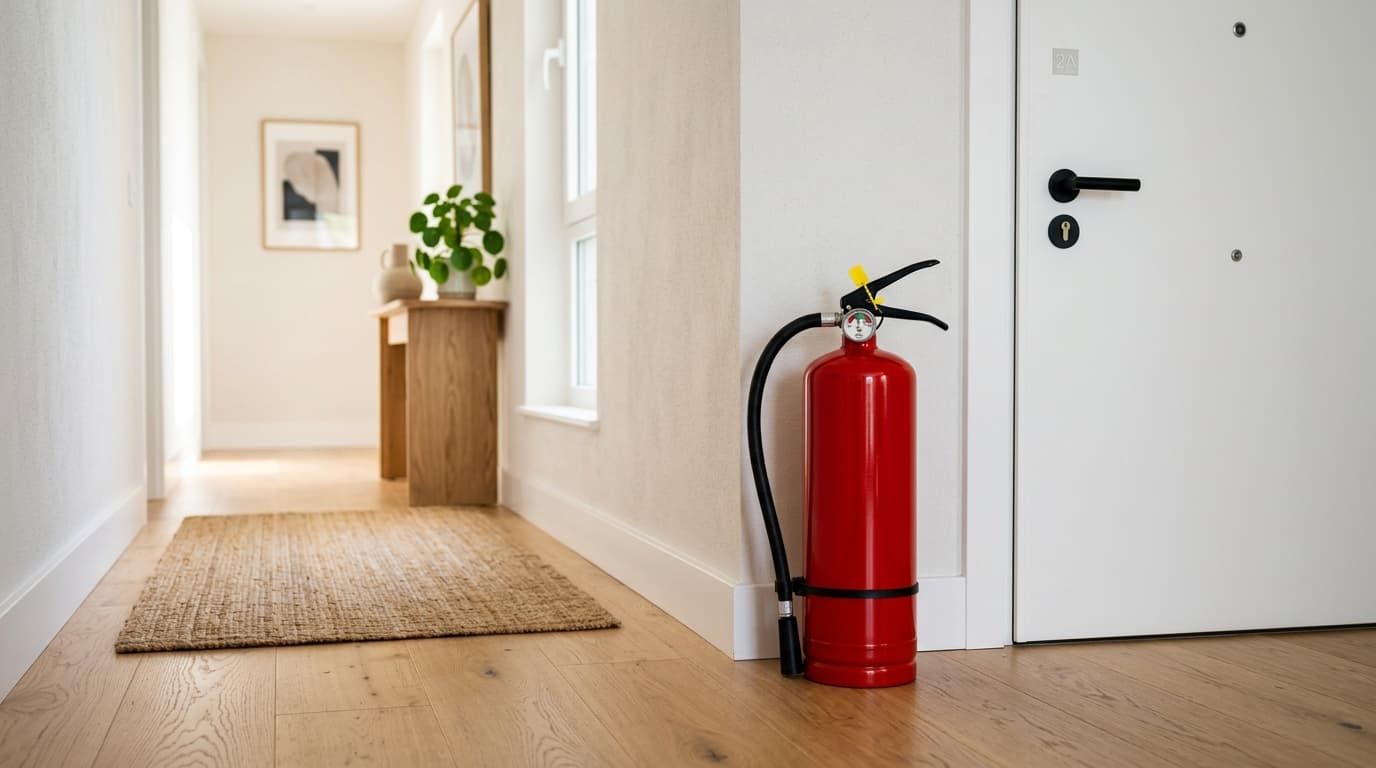
How to Dispose (5 Steps)
- 1
1. Check expiration and pressure: Extinguishers exceeding their 10-year manufacturing lifespan or showing needle readings outside the green zone (0.7–0.98 MPa) must be retired.
- 2
2. Online municipal bulky waste report (Recommended): Visit your local district office website, register 'Fire Extinguisher' under bulky waste (fee ₩0–₩3,000 depending on municipality), print and affix the permit.
- 3
3. In-person Dong Community Center purchase: Visit your local community center to buy a bulky waste sticker, attach it to the canister, and place it at designated curbside pick-up spots.
- 4
4. Check local fire station drop boxes: Many municipal centers and fire stations operate free drop-off containers for old extinguishers.
- 5
5. Never dismantle or toss into trash/metal recycling: Pressurized canisters can explode and powder pollutes water systems. Never unscrew valves or vent powder—discard intact.
Real-World Examples
Standard 3.3kg ABC dry powder extinguisher: Affix municipal bulky waste sticker (₩2,000–₩3,000) and place at curbside pickup
Vehicle & compact 0.7kg–1.5kg mini extinguisher: Attach bulky sticker or drop into Dong Community Center collection box
Kitchen Class K wet chemical extinguisher: Commercial cooking oil extinguisher; register as municipal bulky waste
Throw-type fire extinguishing ampoules: Discard in non-combustible waste bag (PPD) or register as special waste
Frequently Asked Questions
Q. Must a fire extinguisher be replaced after 10 years even if it looks brand new?
A. Yes, mandatory replacement is legally required. Under Korean Fire Safety Laws, dry powder extinguishers have a strict 10-year lifespan from the date of manufacture. Over time, chemical extinguishing powder cakes up and propellant gas slowly leaks, risking complete failure during real emergencies.
Q. Where should the pressure gauge needle point for an extinguisher to be operational?
A. The pressure indicator needle must strictly point inside the center 'Green zone (0.7–0.98 MPa)'. If the needle drops into the yellow zone (insufficient pressure) or climbs into red (overpressure), the unit is defective and must be retired immediately.
Q. Can I discharge all the chemical powder outdoors and recycle the empty canister as scrap metal?
A. Never discharge powder into the environment. Monoammonium phosphate chemicals cause respiratory irritation and soil contamination. Discharging does not relieve internal residual pressure and empty canisters still explode in metal shredders. Always dispose of extinguishers intact via municipal bulky waste channels.