Washer and Dryer Y-Connector Drain Trap DIY and Hose Disposal Guide
- 1When stacking or pairing a washing machine and dryer, jamming two separate drain hoses loosely into a single floor drain causes violent soapy foam backflow during spin cycles, along with foul sewer odors entering the home.
- ✓Learn how to self-install an anti-odor, anti-backflow silicone Y-connector drain trap in 10 minutes, clamp the corrugated hoses securely with stainless worm-gear bands to withstand high-pressure drainage, and responsibly dispose of moldy old PVC drain hoses by cutting them into volume-based trash bags while recycling metal clamps as scrap metal.
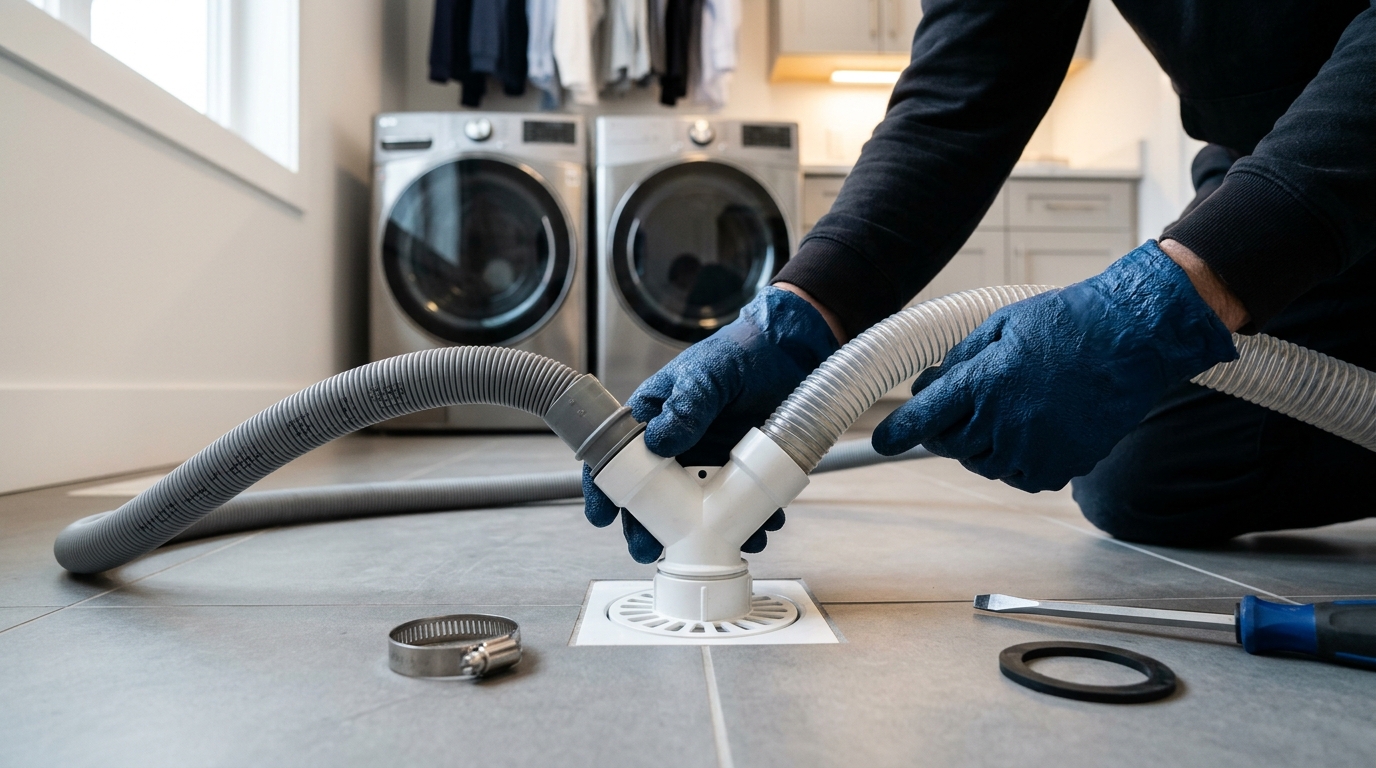
Follow these steps
- 1
Remove Floor Drain Grate and Measure Pipe Diameter: Lift off the square stainless steel drain cover in the laundry utility room and measure the inner diameter of the circular drain hole (typically 35mm, 50mm, or 75mm). Test-fit the multi-tier silicone sealing rings of your dual Y-trap to ensure an airtight friction fit.
- 2
Clear Drain Sludge and Insert Anti-Backflow Trap: Scrape out lint deposits, soap curd, and mineral scale from the existing trap cavity using an old toothbrush and paper towels. Insert the dual Y-drain connector featuring an integrated weighted silicone one-way flap valve straight down into the floor drain.
- 3
Insert Washer Drain Hose and Clamp Securely: Push the thick corrugated washing machine discharge hose (25–32mm outer diameter) firmly over the larger Y-branch barb. Slide a stainless steel worm-gear hose clamp over the connection and tighten firmly with a flathead screwdriver to withstand intense spin-drain surges.
- 4
Attach Dryer Condensate Line with Stepped Adapter: Insert the thin rubber dryer condensate drain line (10–12mm diameter) into the secondary adapter barb. Use the stepped silicone reducer cap if required to eliminate loose gaps, and fasten tightly with a zip tie or miniature spring clamp.
- 5
Perform Spin Drain Test and Check for Soap Leaks: Run a quick drain/spin cycle on the washing machine to verify rapid water evacuation without pooling. Press dry tissue paper around the Y-junction and floor seal to confirm zero bubbly foam backflow, applying silicone waterproof tape if hair-thin perimeter drafts exist.
- 6
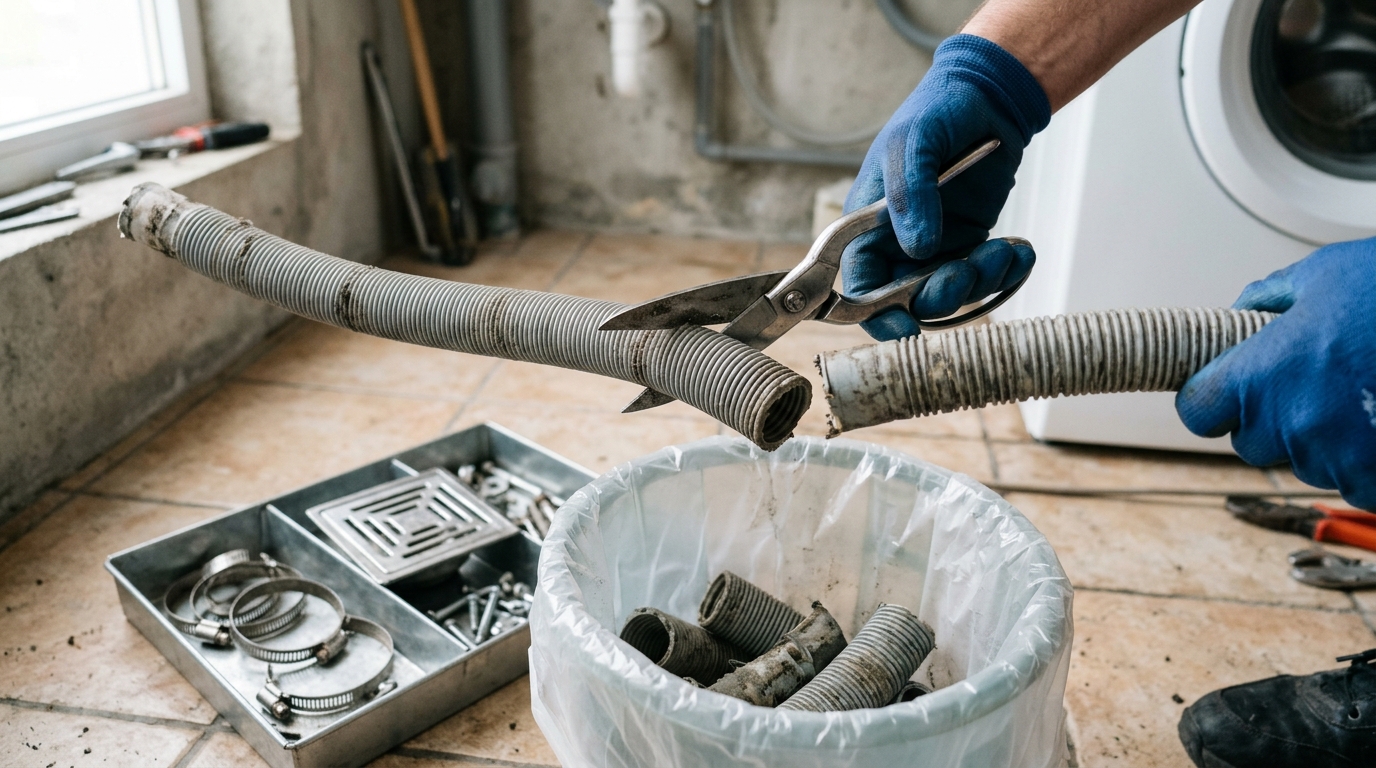
Slice Moldy Old Hoses and Dispose in General Trash: Old corrugated drain hoses harbor heavy mildew and chemical residue within their flexible ridges, making plastic recycling impossible. Cut the old hose into 30–50 cm sections with utility shears and discard them in volume-based trash bags, while sorting metal hose clamps and clean stainless grates into scrap metal recycling.
Frequently asked question
Will water overflow from the Y-trap if the washer and dryer run simultaneously?
No, it will not overflow. Clothes dryers discharge tiny volumes of condensed water (drops to milliliters per minute), whereas washing machines pump dozens of liters during spin cycles. Quality Y-traps feature an enlarged primary channel angled toward the drain and integrated silicone flap valves that prevent high-pressure laundry wastewater from flowing backward up into the dryer hose.
My drain hose is too long and sags on the floor; can I cut it shorter?
Yes, trimming excess length is highly recommended. Long, sagging hoses create stagnant low spots where detergent sludge and lint accumulate, rotting into severe mildew and foul odors. Measure the run from the appliance to the floor drain with a gentle downward slope, leave 10–15 cm of slack, and slice cleanly between the corrugated ribs using a utility knife.
Why can't washing machine drain hoses be recycled with plastics, requiring general trash bags?
Washing machine drain hoses are manufactured from composite blends of flexible PVC, synthetic rubber, and EVA polymers that cannot be melted down in standard mechanical recycling facilities. Furthermore, the interior corrugated ribs harbor heavy biological biofilm, trapped lint, and chemical sludge, classifying them as non-recyclable contaminated waste destined for volume-based trash bags.