Store Closure & Demolition Waste Guide: Fixture Sorting & Subsidy Rules
- 1When closing a commercial storefront or restaurant in Korea, standard residential trash bags cannot be used; business owners must use designated commercial garbage bags or non-combustible woven PP sacks for demolition rubble.
- 2Disposing of under 5 tons of construction waste requires prior municipal reporting to avoid fines up to 3,000,000 KRW.
- 3Usable commercial stainless steel sinks, ice makers, and display coolers should be liquidated through certified used restaurant equipment liquidators to offset costs.
- ✓Furthermore, business owners can apply for the Hope Return Package store demolition subsidy from the Small Enterprise and Market Service (SEMAS) offering up to 2.5 million KRW before physical teardown commences.
Follow these steps
- 1
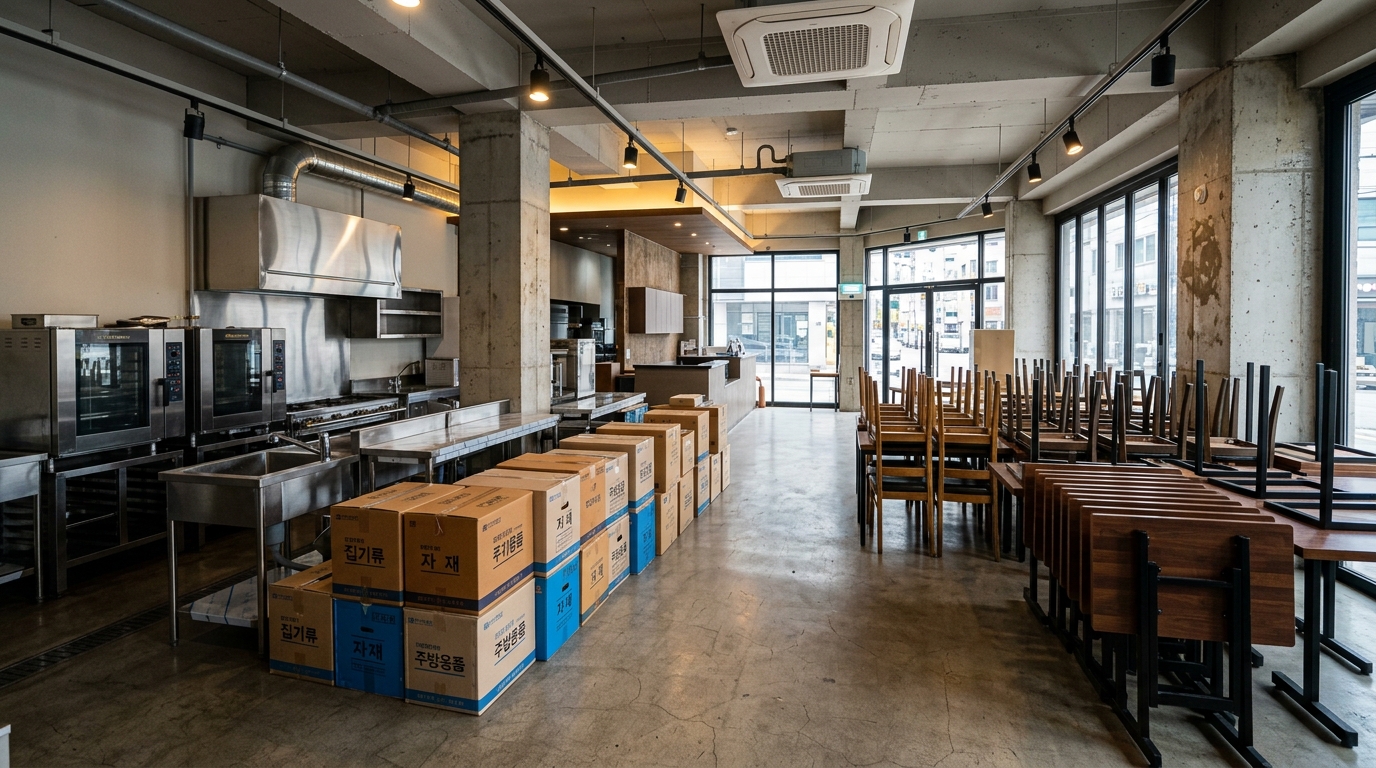
Step 1 (Pre-Demolition Subsidy Application & Baseline Photo Documentation): Before swinging a single hammer, apply for the SEMAS Hope Return Package demolition subsidy (up to 2.5 million KRW) and capture thorough pre-demolition photos of storefront signage, interior fixtures, and kitchen facilities.
- 2
Step 2 (Commercial Equipment Liquidation & Buyout Appraisal): Invite professional commercial kitchen dealers to appraise 4-door industrial chillers, fryers, ice machines, and dining sets for immediate cash buyout, minimizing total disposal tonnage.
- 3
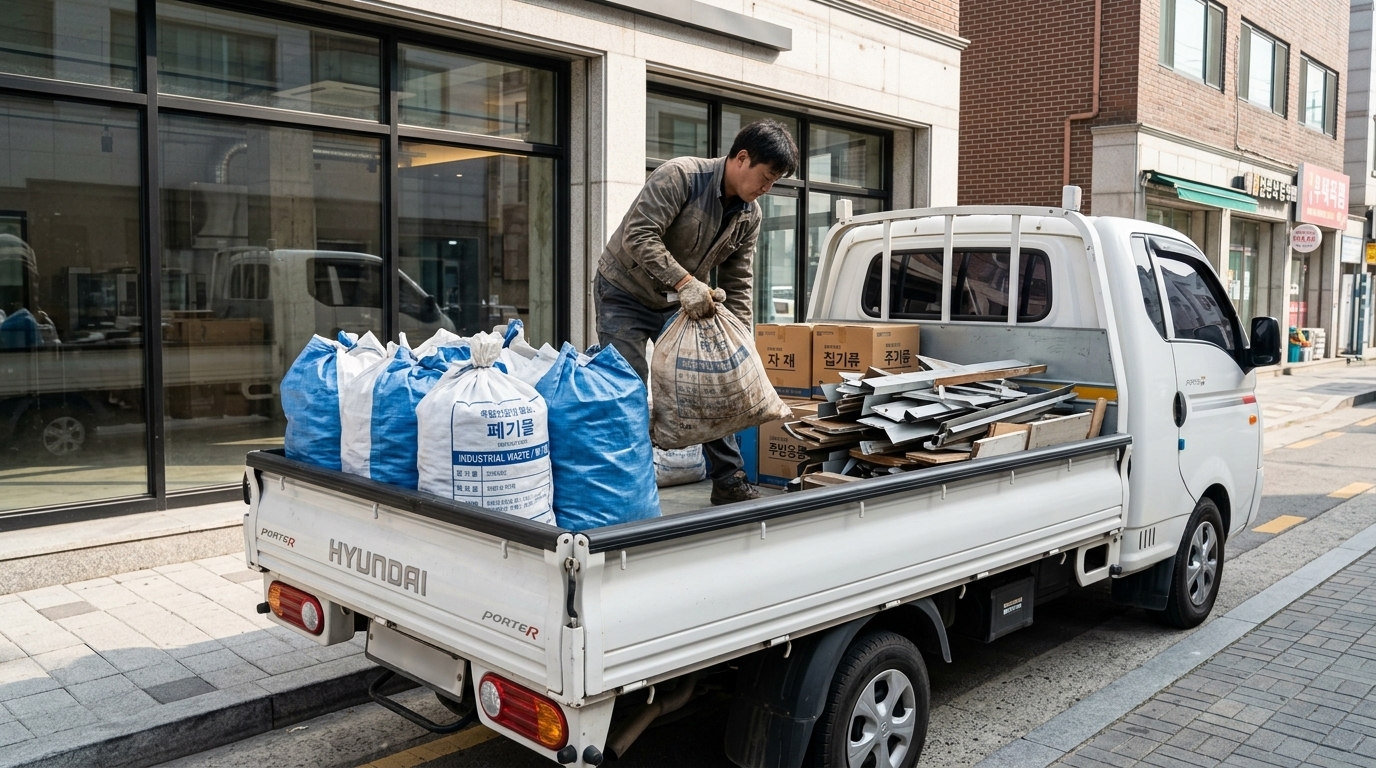
Step 3 (Commercial General Waste & Non-Combustible Masonry Sorting): Place unrecyclable packaging and dry refuse into yellow/white commercial district trash bags, and pack chipped tiles, drywall gypsum, and glass into designated heavy-duty woven PP sacks filled up to 80% capacity.
- 4
Step 4 (Interior Teardown & Scrap Metal/Timber Segregation): During partition wall and ceiling demolition, sort steel studs, conduit pipes, and copper wiring into scrap metal recycling, while sending untreated demolition timber and MDF panels to wood recovery processors.
- 5
Step 5 (Municipal Construction Waste Reporting & Final Subsidy Settlement): If rubble weighs under 5 tons, submit a municipal small-scale construction waste notification to your district office and haul to authorized depots, then submit post-demolition invoices and bank receipts to claim government reimbursement.
Frequently asked question
Are commercial 4-door restaurant coolers and deep fryers eligible for free home e-waste pickup (1599-0903)?
No, they are not. Korea's 1599-0903 free e-waste recycling service is strictly for residential domestic appliances. Commercial 4-door stainless refrigerators, heavy glass display cases, and industrial gas fryers are excluded. You should sell them to commercial kitchen liquidators, or dispose of them through commercial scrap recyclers.
What are the eligibility criteria and funding limits for the SEMAS Hope Return Package demolition subsidy?
Tenanted small business owners operating for at least 60 days who are facing closure or closed within the past year are eligible. The government subsidy reimburses up to 130,000 KRW per pyeong (approx. 3.3 sqm) capped at a maximum of 2,500,000 KRW. Crucially, online application and approval must be completed before demolition work begins.
How should concrete masonry, broken ceramic tiles, and drywall gypsum from commercial restoration be disposed of?
They are classified as non-combustible construction debris and must never go into ordinary trash bags. For small batches under 5 tons, purchase dedicated heavy-duty woven PP sacks (20L–50L) from community centers, or submit a municipal construction waste notification to transport directly to authorized recycling yards.
How should exterior commercial storefront signs (channel letters, flex signs) be removed and disposed of?
Because exterior sign removal requires elevated cherry picker lifts, hiring specialized sign contractors is strongly advised. Aluminum frames, steel sheet metal, copper wires, and LED ballasts are recycled as scrap metals, while flex vinyl skins go into commercial waste sacks. Always photograph pre- and post-removal states for government subsidy audit.