Smoke Detector Battery Replacement, Muting & Safe E-Waste Disposal Guide
- 1Under Article 10 of the Fire Safety Act, residential photoelectric smoke alarms and kitchen thermal heat detectors are mandatory safety fixtures in all housing units.
- 2Powered by sealed lithium primary batteries engineered to last approximately 10 years, aging alarms inevitably trigger loud low-battery chirps or nuisance false alarms (often triggered by cooking vapor, humidity, or dust) in the middle of the night.
- 3Homeowners must hush the sound via the front test/silence button, twist the alarm counterclockwise off its ceiling bracket, and safely disconnect the plug-in lithium battery pack.
- 4Discarding lithium batteries into municipal trash bags presents extreme compaction fire hazards in sanitation trucks; they must be dropped into dedicated battery recycling bins.
- ✓The remaining plastic sensor housing and PCB circuit board qualify as small household electronic waste and should be placed free of charge into small e-waste collection boxes or standard municipal general trash bags.
Follow these steps
- 1
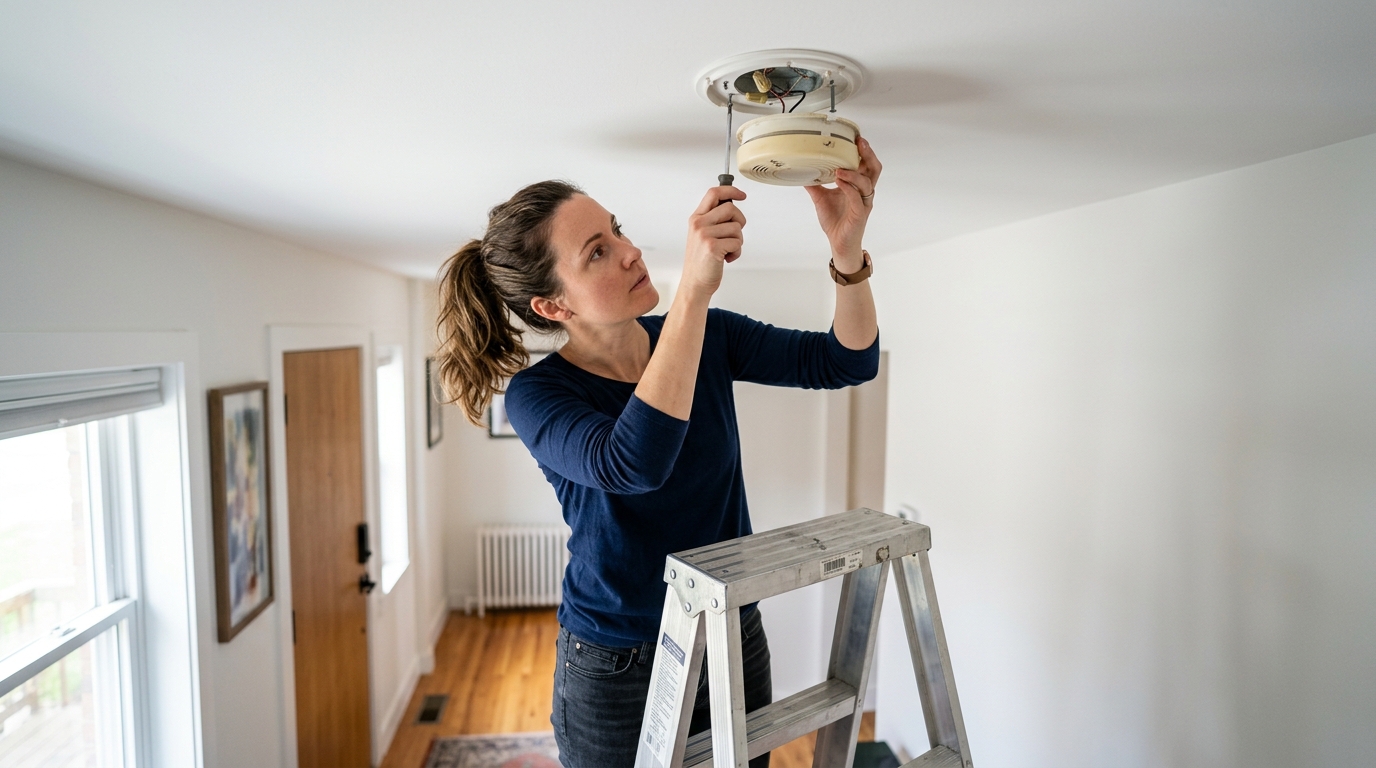
Step 1 (Emergency False Alarm Hush & Initial Check): When an alarm triggers due to cooking fumes, shower steam, or low-battery alert, stand safely on a step stool and press the central Test/Silence button for 1–2 seconds to temporarily mute the loud siren. Inspect the area to verify that there is no actual fire hazard, and open windows for cross-ventilation.
- 2
Step 2 (Counterclockwise Twist Removal & Harness Disconnect): Firmly grasp the detector body with both hands, twist it counterclockwise approximately 15 to 30 degrees until it clicks free, and lower it off the ceiling mounting plate. If the unit is hardwired, squeeze the plastic release tab on the multi-pin quick-connector to unplug the wiring harness.
- 3
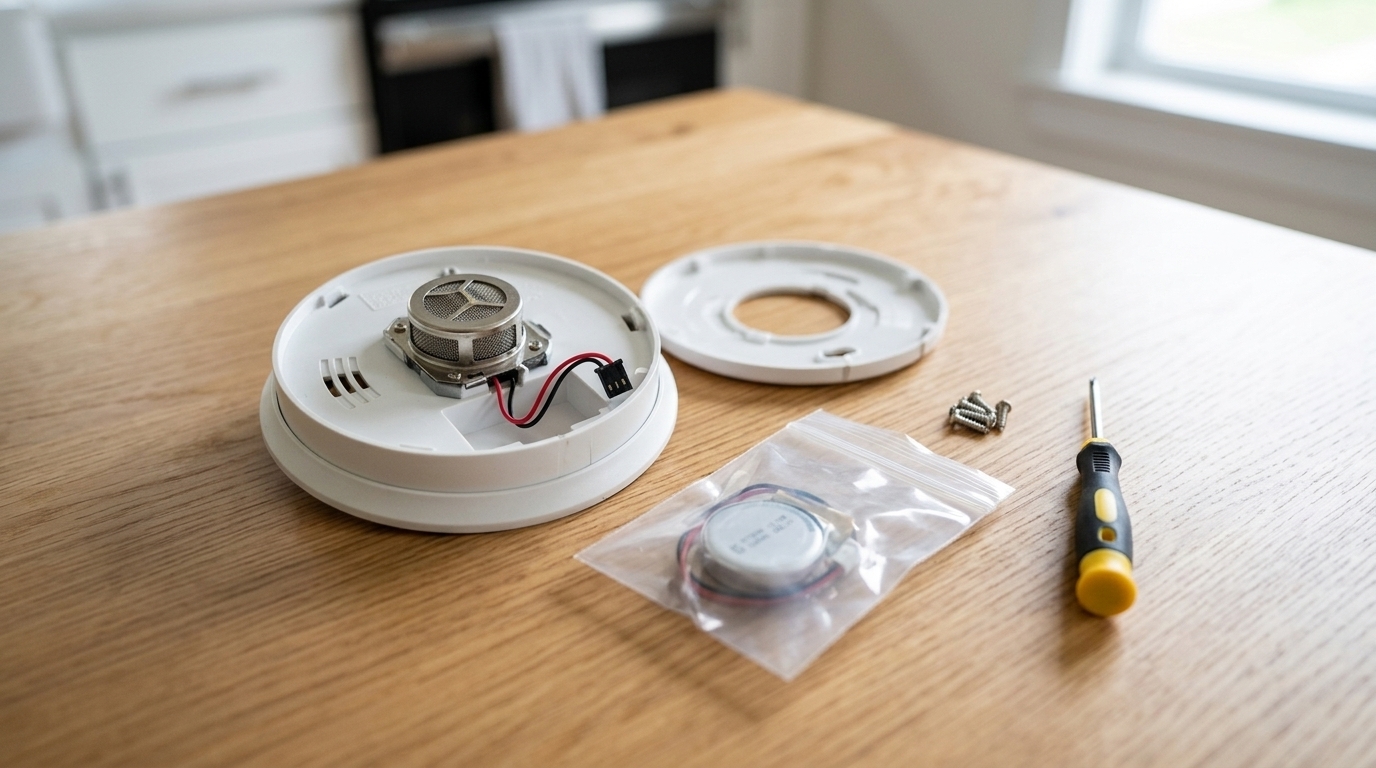
Step 3 (Extracting Dedicated Lithium Battery & Terminal Taping): Slide open the rear battery compartment and detach the specialized lithium primary battery pack (CR123A, 9V, or connector-wired lithium cell). Wrap non-conductive electrical tape over the exposed metal terminals or wire plugs to prevent accidental short-circuits, and place the cell into a clear recycling pouch.
- 4
Step 4 (Unscrewing Ceiling Base Plate & Inspecting Drywall): Use a Phillips screwdriver to back out the two mounting screws securing the round plastic base plate to the ceiling drywall. If the screw anchors have stripped or loosened, plan to shift the new mounting bracket 2–3 cm into solid backing or use self-drilling hollow-wall anchors.
- 5
Step 5 (Depositing E-Waste & Compliant Reinstallation): Drop the battery-free plastic detector body and base into residential small e-waste collection bins (or general combustible trash bags if drop-boxes are unavailable). Deposit the taped lithium batteries strictly into municipal battery collection boxes. Install the replacement smoke alarm in compliance with fire safety codes: mounted at least 60 cm away from walls and at least 1.5 meters from air conditioning vents or bathroom exhaust fans.
Frequently asked question
Why does my smoke alarm emit a short high-pitched chirp every 1–2 minutes in the middle of the night?
When a smoke detector chirps intermittently every 30 to 60 seconds with an occasional flashing LED in the absence of smoke, it is signaling a low-battery alert. As internal voltage drops below operating thresholds, the microchip chirps to prompt renewal. Mute it temporarily via the test button, then immediately replace the battery or swap the entire 10-year-old alarm unit.
Should discarded fire alarm bodies go into regular trash bags or small e-waste bins?
Once internal batteries are removed, smoke alarm bodies contain electronic PCB sensors and optical detection chambers, classifying them as small household e-waste. You can drop them 100% free into community small e-waste collection boxes, or place them in general trash bags if drop-boxes are unavailable. Scrap metal recycling is strictly prohibited.
How do apartment ceiling detectors differ from standalone residential smoke alarms?
Standalone alarms operate independently on built-in batteries with self-contained sirens. In contrast, multi-family high-rise apartments utilize hardwired detectors linked directly to a central fire control receiver in the management building. Detaching a hardwired unit triggers building-wide emergency alarms, so always notify apartment management to bypass zones before maintenance.
Why must heat detectors be installed in kitchens instead of optical smoke detectors?
Cooking steam, boiling grease aerosols, and toaster smoke frequently enter optical smoke chambers, causing persistent nuisance alarms in kitchens. Fire codes therefore mandate fixed-temperature thermal heat detectors (triggering around 65°C–70°C) for kitchens, while photoelectric smoke alarms are reserved for bedrooms, living spaces, and hallways.