Ice Pack (Gel vs Water) & Thermal Cooler Bag Complete Disposal Guide
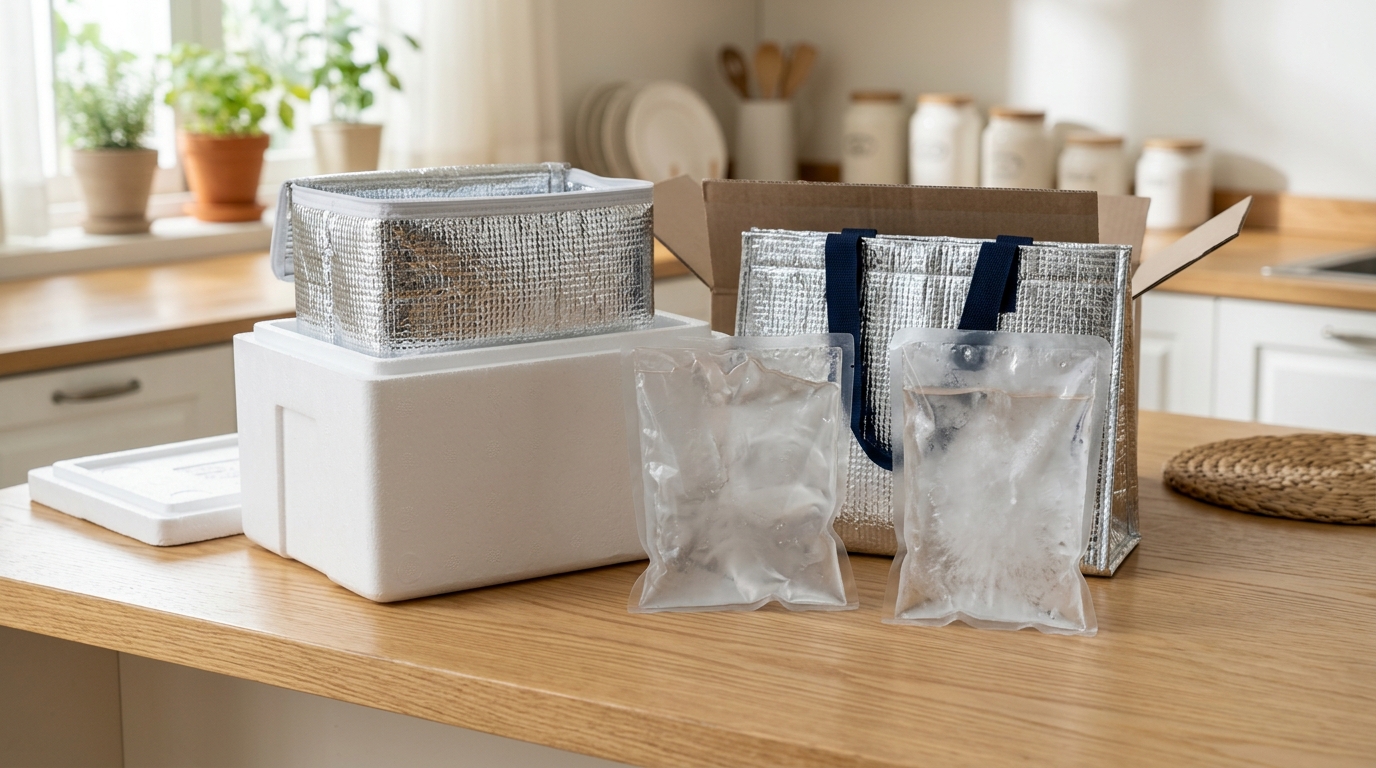
Ice packs accumulated from fresh food delivery require completely different disposal and reuse methods depending on their filling. Gel ice packs containing super absorbent polymer (SAP) are microplastics; pouring them down the sink or toilet causes severe drain clogging and marine pollution. Gel packs must be thrown entirely into general waste bags or dropped in municipal collection bins. Before discarding, you can creatively reuse them as DIY aromatic diffusers/mosquito repellents, freeze them to boost refrigerator efficiency and save 5-10% electricity, or use them as reusable hot/cold compresses. In contrast, 100% pure water ice packs can be cut open, the water drained into the sink, and the clean plastic envelope recycled as vinyl. Foil-lined insulated cooler bags are non-recyclable composites and belong in general trash.
Follow these steps
- 1
Step 1 [Check Ingredients & Integrity]: Inspect the ice pack packaging to verify if it contains super absorbent polymer (gel) or 100% pure water, and check for leaks or tears.
- 2
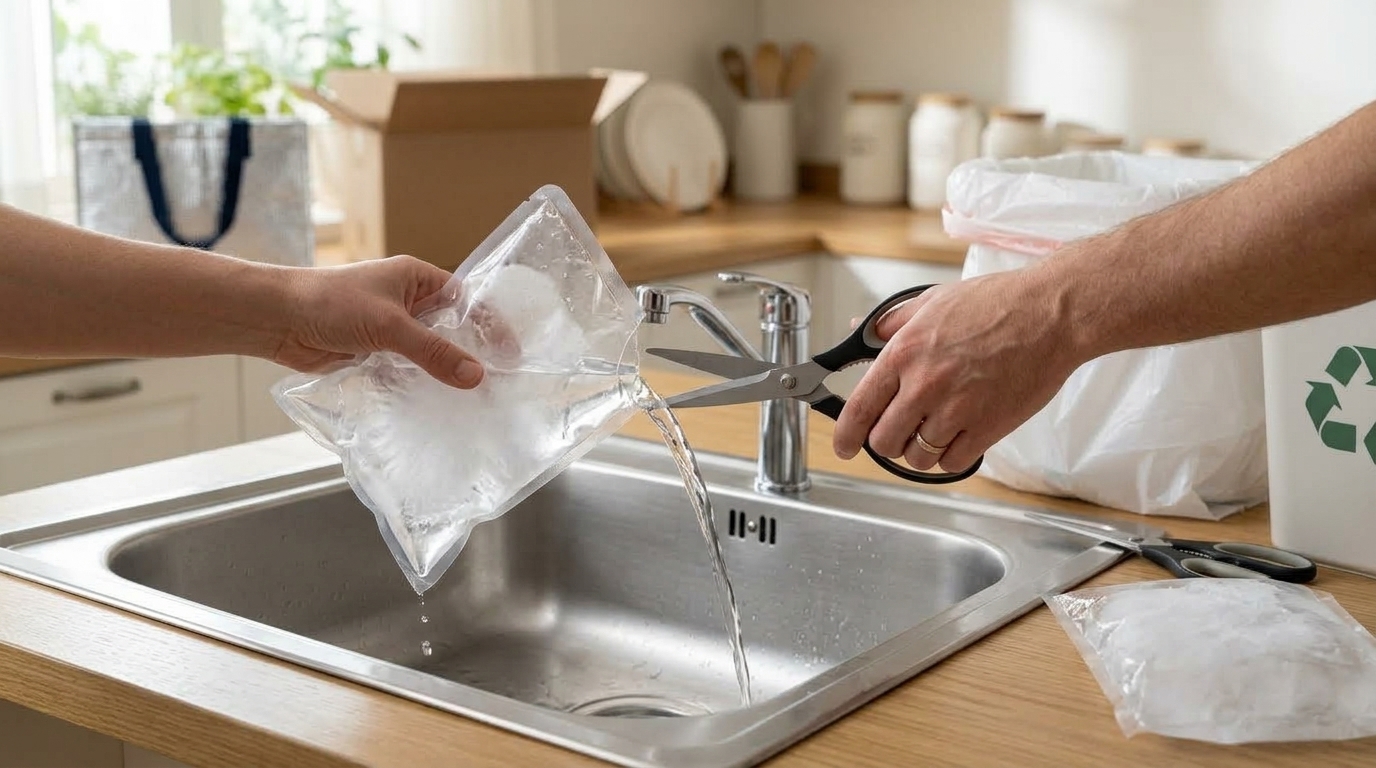
Step 2 [Drain Pure Water Packs]: For 100% water packs, snip a corner with scissors, drain clean water into the sink, dry the outer plastic pouch, and recycle it as vinyl.
- 3
Step 3 [Reuse Gel Packs Before Disposal]: Wash undamaged gel packs and freeze them to optimize refrigerator airflow (saving 5-10% power), warm slightly for hot compresses, or mix gel with essential oils in a cup for DIY room fresheners and insect repellents.
- 4
Step 4 [Dispose Gel Packs Unopened]: Never cut or drain gel (SAP) packs into drains. Discard whole sealed packs into general trash bags or drop clean standard packs into municipal collection bins.
- 5
Step 5 [Insulated Cooler Bags & Styrofoam]: Discard composite foil-lined cooler bags in regular trash bags, and strip all adhesive tape and shipping labels from styrofoam boxes before recycling them as white styrofoam.
Frequently asked question
How can I make a natural room freshener and mosquito repellent using gel ice packs?
Fill a clean glass jar or cup with ice pack gel and add 5-10 drops of essential oil or perfume, stirring gently. The gel holds moisture and diffuses scent for 1-2 weeks. During summer, adding citronella, eucalyptus, or peppermint oil creates an effective eco-friendly mosquito and insect repellent for windowsills and entryways.
What precautions should I take when reusing ice packs as hot or cold compresses?
For cold therapy, freeze the pack and wrap it in a towel to relieve swelling, sprains, or muscle soreness. For hot compresses, microwave a room-temperature gel pack in short 30-60 second increments (excessive heating can cause the plastic pack to rupture from internal pressure). Always wrap with a dry towel to protect bare skin from thermal burns.
Does keeping frozen ice packs in the refrigerator/freezer help save electricity?
Yes. Packing empty freezer pockets or vegetable drawers with frozen ice packs locks in cold air when opening doors. This stabilizes internal temperatures, reduces compressor cycling, and cuts refrigerator energy consumption by roughly 5% to 10%.
Can I use ice pack gel to hydrate soil in edible vegetable gardens?
It is not recommended for edible plants. Super absorbent polymer (SAP) is a synthetic microplastic derivative; mixing it into soil with edible crops like lettuce, perilla leaves, or peppers poses chemical absorption risks. Restrict moisture retention use strictly to ornamental houseplants and floral containers.
What condition must ice packs be in when deposited into community center collection bins?
Municipal bins are part of local merchant reuse programs. Only deposit clean, undamaged standard gel ice packs free from heavy writing or grease stains. Punctured, soiled, or 100% water packs must not be placed in community bins; dispose of them in general trash or vinyl recycling.