Battery Electrolyte Leakage Emergency Handling & Safe Disposal
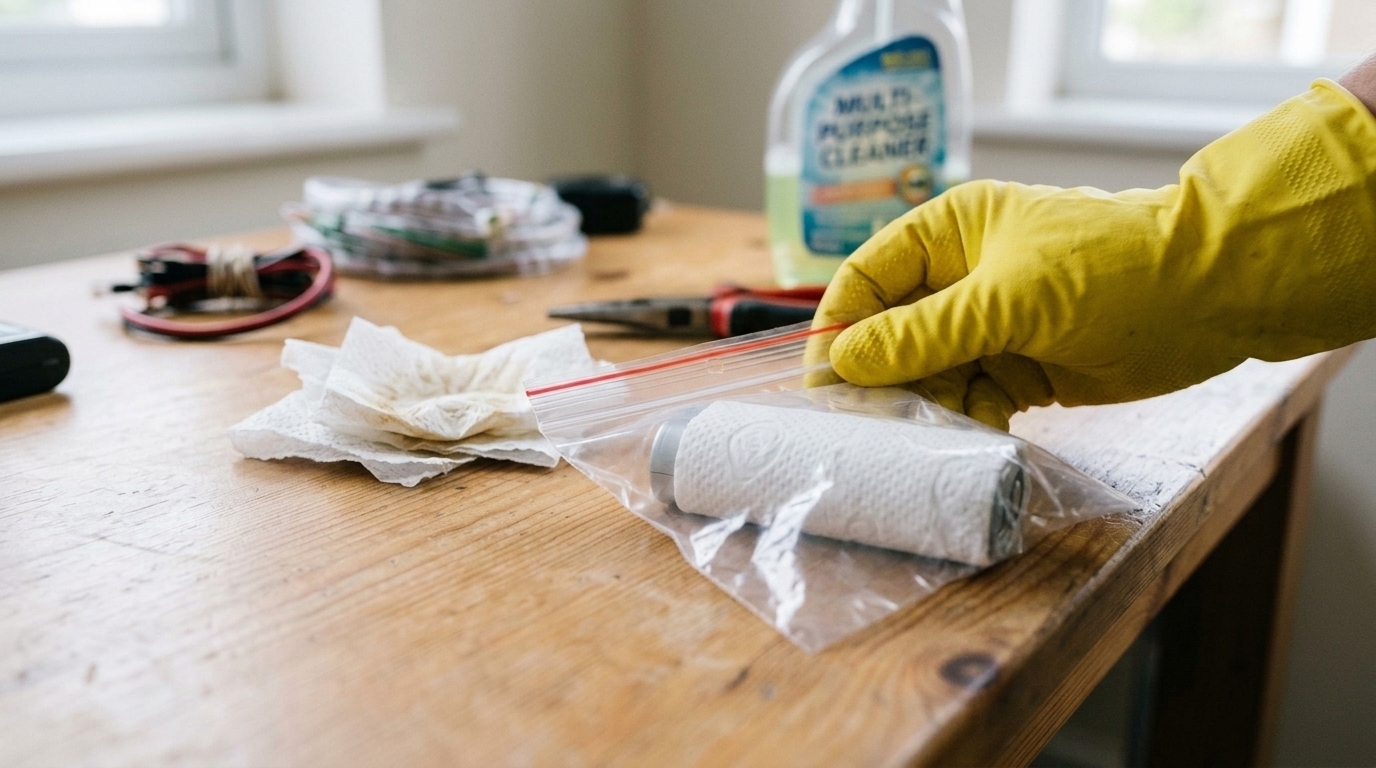
Electrolyte leakage occurs when battery internal chemicals spill due to aging, corrosion, or physical damage. Leaked fluid is highly corrosive and can cause severe chemical burns to skin. Never handle leaked batteries with bare hands; always wear thick rubber or vinyl gloves. Wipe up liquid with paper towels, seal the battery in a clear plastic ziplock bag, and drop off at designated waste battery recycling bins in apartment complexes or local community centers.
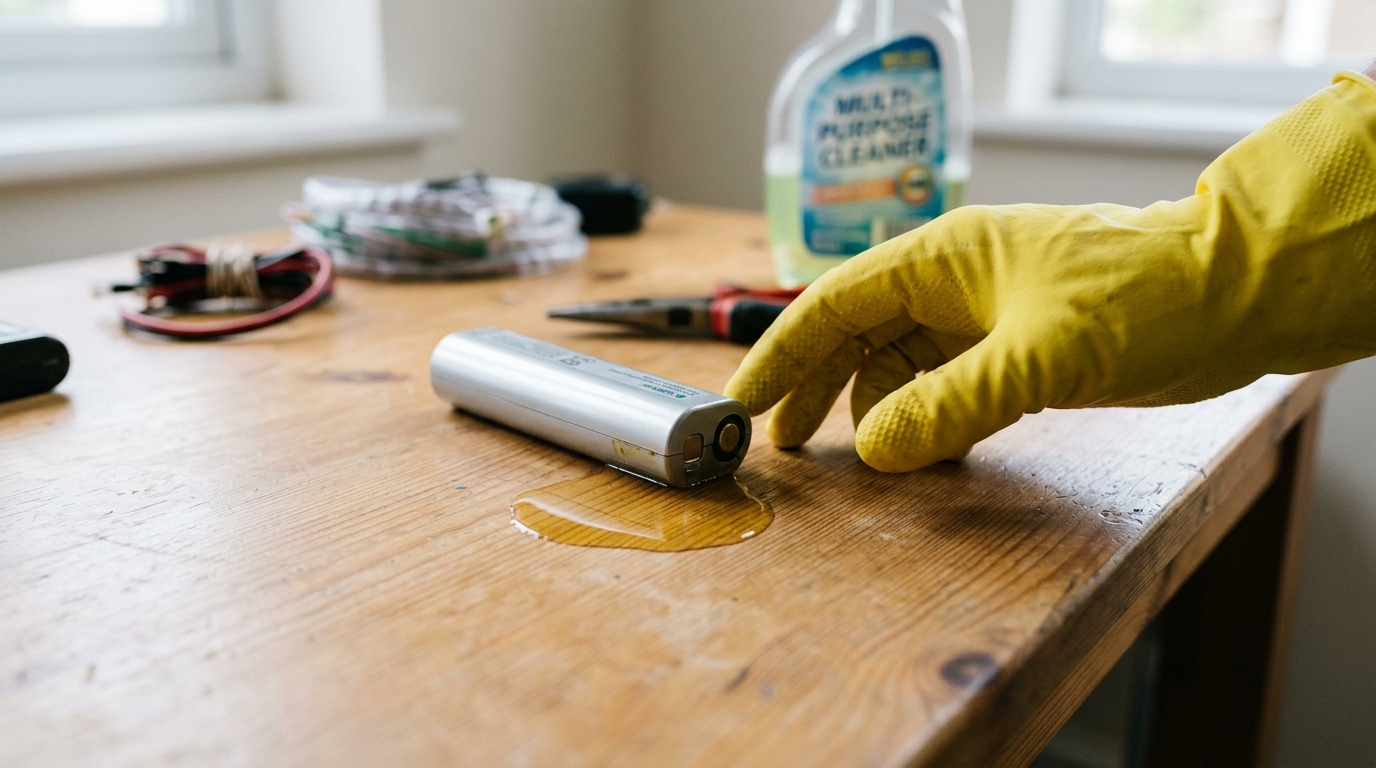
Follow these steps
- 1
Put on thick rubber gloves or disposable vinyl gloves before handling leaked batteries.
- 2
Remove the battery from the electronic device immediately to prevent further corrosion and device damage.
- 3
Wipe up spilled electrolyte and white residue using paper towels; clean metal contacts with diluted vinegar if needed.
- 4
Wrap the leaked battery securely with 2-3 layers of paper towel and seal inside a clear plastic ziplock bag.
- 5
Dispose of the sealed bag into dedicated battery recycling boxes at apartment complexes or community centers.
Frequently asked question
What is the white powder or clear fluid leaking from batteries?
It is potassium carbonate powder formed by potassium hydroxide electrolyte reacting with carbon dioxide. It is corrosive and requires gloved handling.
Can device battery contacts damaged by electrolyte be cleaned and restored?
Dip a cotton swab in mild vinegar or lemon juice to neutralize alkaline corrosion, then clean with rubbing alcohol.
Can I drop off a leaked battery in an apartment battery collection bin?
Yes, but it must be wrapped in paper towels and sealed in a ziplock bag before placing in the collection bin to prevent short circuits.