How to Dispose of Leftover Paint
- 1Leftover water-based or oil-based (solvent) paints must never be poured down sinks or drains; synthetic resins and VOCs coat pipe walls, cause catastrophic plumbing clogs, and violate water conservation laws.
- 2For small volumes under 500ml, absorb liquid into crumpled newspaper or scrap rags, let it dry completely outdoors, and toss into general municipal trash.
- 3For larger quantities over 1L, mix commercial paint hardener to solidify into solid rock, then discard inside non-combustible waste bags (Bulyeonsung Madae).
- ✓Empty metal paint cans with cleanly scraped, dry interiors belong in scrap metal recycling, while dry plastic pails go to plastic recycling.
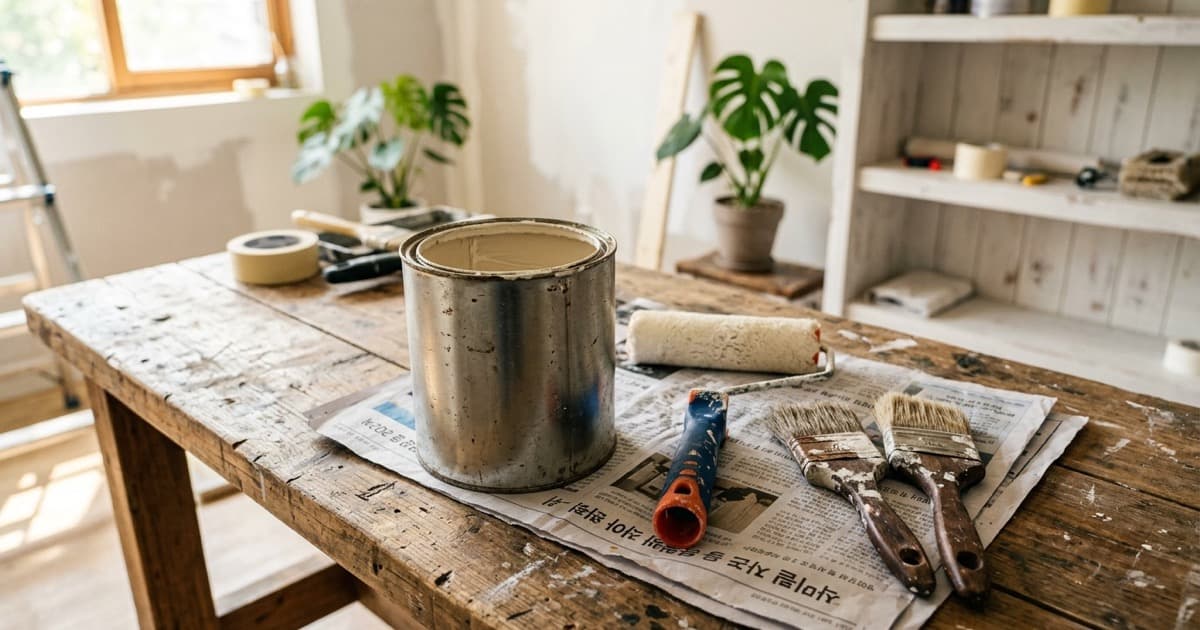
How to Dispose (6 Steps)
- 1
Never pour down drains or toilets: Flushing liquid paint into sinks or toilets causes permanent sewer blockage and municipal water pollution; never drain liquid paint.
- 2
Small amounts (<500ml) absorption & air drying: Pour leftover dribbles onto 4–5 sheets of crumpled newspaper, cardboard, or old rags; allow to dry completely in a ventilated area, then toss into general trash bags.
- 3
Large amounts (1L+) solidification with paint hardener: For bulk leftover paint, add commercial paint hardener powder, stir with a wooden stick, and allow to cure into solid hardened lumps.
- 4
Discard solidified paint in non-combustible PP bags: Bag rock-hard cured paint securely and discard inside a municipal non-combustible waste bag (Bulyeonsung Madae).
- 5
Recycle clean, dry steel cans as scrap metal: Empty metal paint cans with thoroughly dried interiors and no tacky residue can be recycled with their steel lids in scrap metal bins.
- 6
Discard uncleaned residue-caked cans in general waste: Cans or plastic buckets coated with thick, tacky cured paint layers cannot be recycled; discard inside general trash or non-combustible bags.
Real-World Examples
Small water-based paint residue (<200ml): Absorb onto newspaper, dry completely, and discard in general trash.
Half-full oil-based paint (1L–2L): Mix commercial paint hardener and discard cured solid in non-combustible bag.
Thoroughly dried empty steel paint tin: Recycle in scrap metal bin.
Frequently Asked Questions
Q. Why shouldn't I wash leftover paint down the sink with running water?
A. Even water-based paints cling to plumbing walls, hardening into thick chemical coatings that trap grease and debris, eventually causing total pipe obstruction. In municipal wastewater systems, chemical resins poison bacterial treatment plants, resulting in severe water contamination and environmental violations.
Q. Where can I purchase paint hardener and how is it used?
A. Paint hardeners (solidifiers) are widely available at hardware stores, paint specialty shops, and online retailers. Pour the powder into the leftover paint and stir with a wooden stick for 1–2 minutes; within 5–10 minutes, the liquid cures into a solid rock-like mass that can be bagged in non-combustible waste bags.
Q. Can empty steel paint cans be recycled as scrap metal?
A. Only if they are completely dry and empty. If the interior is thoroughly scraped clean and dried so no wet or tacky residue transfers to your fingers, metal cans and lids are fully recyclable as scrap metal. If heavy, tacky sludge remains, discard inside non-combustible waste bags.
Q. Is the disposal method different for water-based vs. oil-based paints?
A. The core rule is the same: neither can ever be flushed into drains. Both require drying for small amounts or hardeners for bulk disposal. However, solvent-based paints emit volatile flammable vapors; always dry them outdoors away from any sparks or open flames to prevent fire hazards.