DIY Water Purifier Removal, Valve Restoration & Filter Disposal Guide
- 1When vacating a rental home or ending a water purifier subscription, performing DIY detachment instead of paying professional technician removal fees (₩30,000–₩50,000) carries serious risks of under-sink flooding and wood floor warping if line pressures and threads are mishandled.
- 2Because water purifiers are tapped directly into main domestic pressurized cold water lines, you must shut off the under-sink angle stop valve and purifier T-adapter valve first, purge residual line pressure via dispensing buttons, and depress the push-fit quick-connect collet collar to slide out PE tubing cleanly without scratching.
- 3When unthreading the brass tee adapter to reconnect the original faucet flex hose, wrapping 10–15 turns of PTFE Teflon thread-seal tape is essential for leak-free sealing.
- 4Furthermore, the disconnected purifier must be completely drained via rear reservoir drain ports to prevent transportation water damage.
- ✓Used sediment and carbon block filters are non-recyclable composite resins that belong in municipal trash bags, while customer-owned purifier chassis qualify for free municipal small e-waste collection.
Follow these steps
- 1
Step 1 (Power Unplug & Water Feed Valve Shut-Off): Unplug the purifier power cord. Open the kitchen sink base cabinet, locate the small brass T-adapter valve branching off the cold water line, and turn its small blue or orange lever perpendicular (90 degrees) to the tube to shut off raw water feed. Turn the main wall angle shutoff valve clockwise as well for absolute leak protection.
- 2
Step 2 (Depressurizing Lines & Draining Internal Water Reservoirs): Place a cup under the front dispenser spout and press the dispense button until water ceases flowing to relieve internal hydrostatic pressure. For tank-based models, open the rear silicone drain plug or bottom valve to purge all reservoir water into a basin to prevent interior sloshing during transport.
- 3
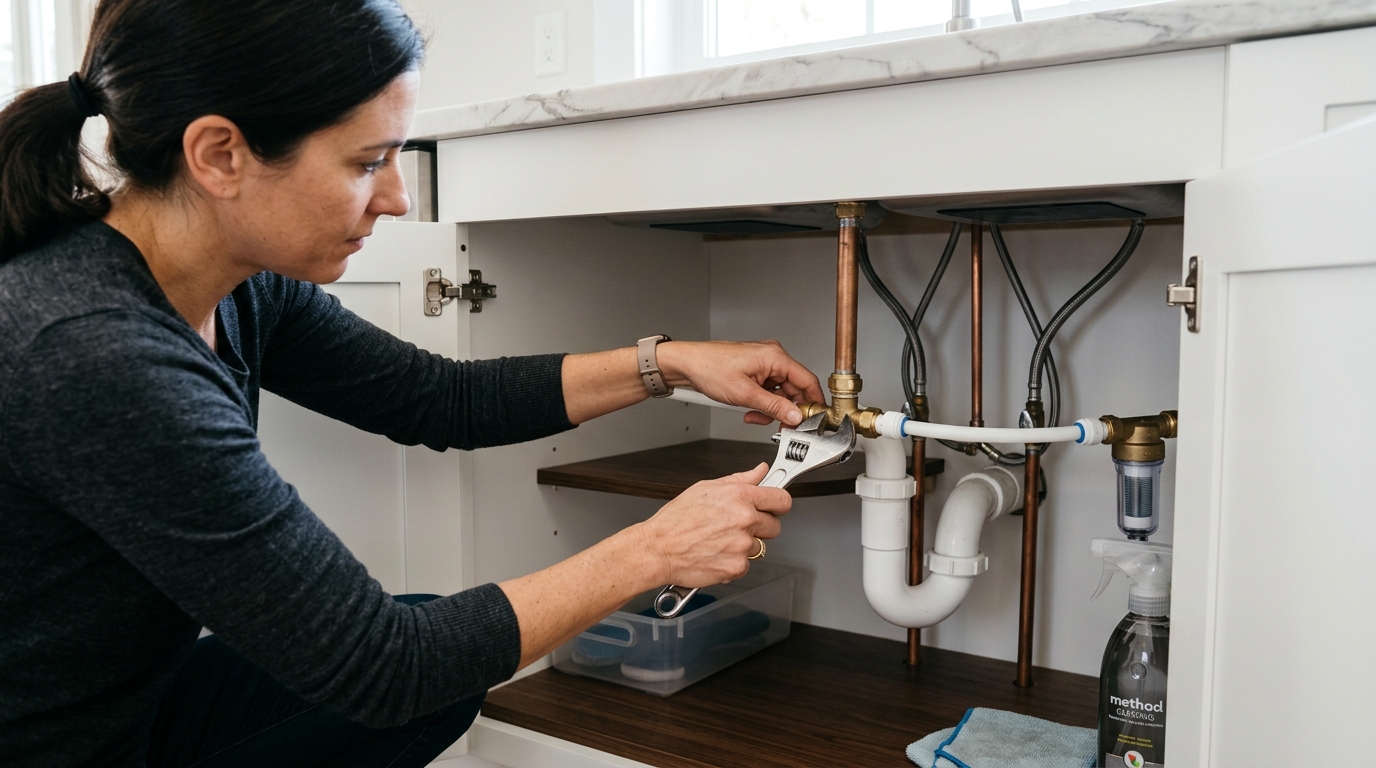
Step 3 (Releasing Push-Fit Quick-Connect Collets): Disconnect the 1/4-inch white polyethylene (PE) tubing from the purifier and under-sink adapter. Do not jerk the hose forcefully; firmly depress the small plastic collet collar ring surrounding the tubing against the fitting body with your fingernail, then slide the tube out smoothly.
- 4
Step 4 (Unthreading Tee Adapter & Teflon Sealing Original Plumbing): Use an adjustable wrench to loosen and remove the brass T-diverter valve sandwiched between the wall angle stop and faucet flex line. Wrap 10 to 15 tight clockwise wraps of PTFE thread-seal Teflon tape around the male threads, reconnect the original braided faucet hose, tighten securely, and wipe with dry tissue to confirm zero weeping.
- 5
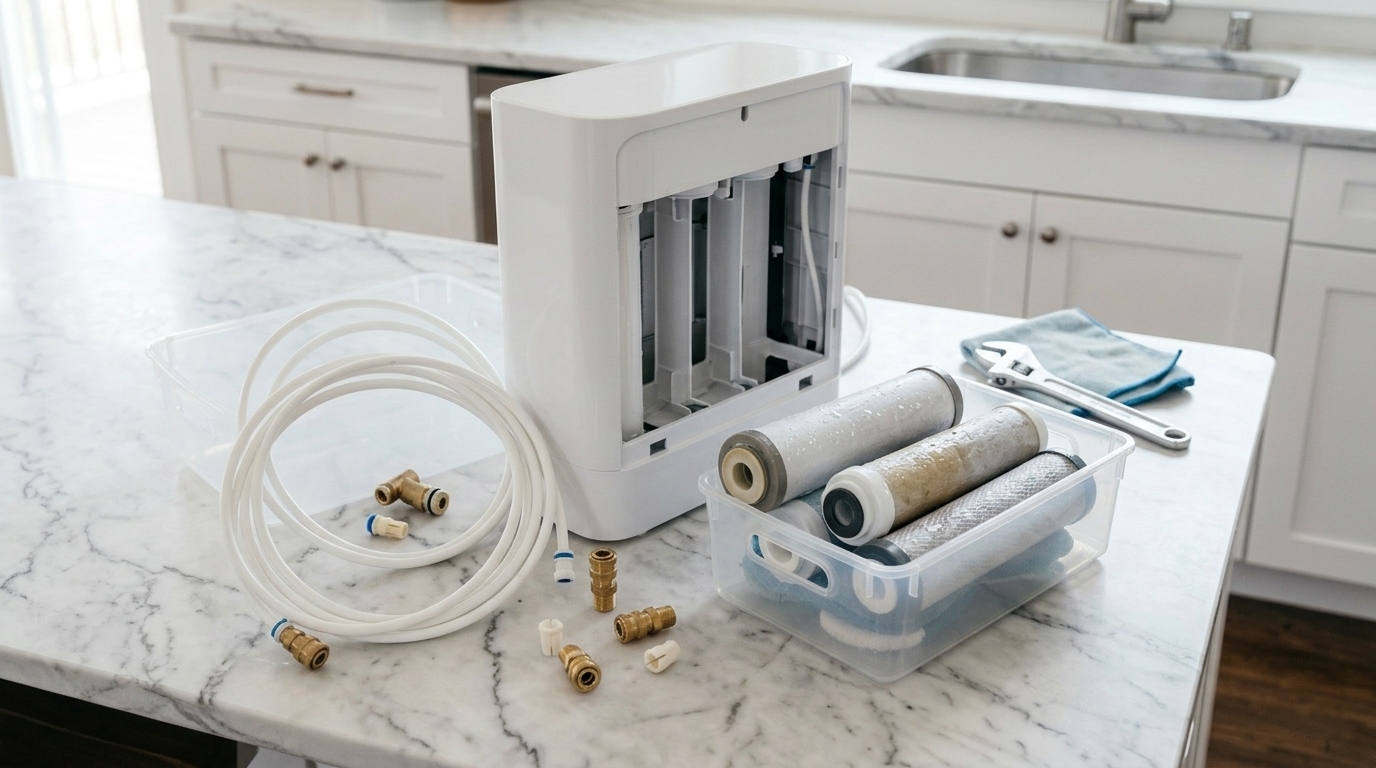
Step 5 (Discarding Used Filters in Trash & Purifier E-Waste Recycling): Extracted cylindrical sediment and carbon block filters contain trapped contaminants and bonded resins; drain residual moisture and discard them into regular general municipal trash bags (Jongnyangje). Repack leased purifiers for courier return, or drop customer-owned units into small e-waste collection bins free of charge.
Frequently asked question
Must I pay a technician removal fee (₩30,000–₩50,000) when a water purifier rental contract ends?
No. Most major subscription brands (Coway, SK Magic, Cuckoo, Chungho, LG) officially permit self-removal. By unplugging and packaging the purifier and accessories into a courier carton yourself, you can request a prepaid courier pickup return, completely waiving the ₩30,000–₩50,000 on-site technician dispatch fee.
How do I seal small countertop drill holes left behind secondary drinking water faucets?
Purchase an inexpensive stainless steel countertop sink hole cover (₩1,000–₩2,000 / $1–$2) with a waterproof silicone O-ring. Tightening the underside wing nut securely seals the 12–14mm hole against water and food debris. For rental departures requiring seamless restoration on acrylic stone counters, color-matched solid surface repair kits provide invisible fills.
Why can't spent water purifier filter cartridges be recycled in curbside plastic bins?
Although the outer casing is molded from polypropylene, the interior core is permanently bonded with activated carbon granulate, melt-blown microfibers, and hollow-fiber membranes loaded with captured heavy metals. Recycling centers reject them as contaminated composite waste; drain residual water and discard them into regular municipal trash bags.
Do compact countertop purifiers and commercial floor-standing purifiers differ in disposal rules?
Yes. Compact tankless countertop purifiers under 1 meter qualify as small household electronics and can be deposited into residential small e-waste collection bins for free. In contrast, large commercial floor-standing tank units exceeding 1 meter require booking a free municipal doorstep collection (1599-0903) or purchasing a local bulky waste sticker.